
Are your digital tools quietly creating more work instead of less? Singapore SMEs are digitalising fast, with 95.1% adopting at least one digital area in 2024, yet many teams still retype the same customer details into the CRM, the accounting software and the stock sheet. The problem is rarely missing software. It is that the tools don’t talk to each other, so your people become the connection between them.
Key Takeaways
- More software doesn’t solve operational problems. Connected software does.
- System integration links your existing tools instead of replacing them.
- Your website is the first entry point for customer data.
- Start with process clarity, not tool selection.
- Clean, consistent data supports accurate reporting and AI adoption.
What is system integration, and why does it matter now?
System integration connects your business platforms so information moves between them without manual re-entry. For example:
- A website enquiry reaches the CRM automatically.
- Customer details flow into your quotation process.
- Inventory availability updates across sales channels.
- Completed orders sync with accounting.
It matters more as AI arrives. SME AI adoption rose to 14.5% in 2024, and IMDA is expanding programmes such as the Digital Enterprise Blueprint to help SMEs build AI-ready capabilities. AI works best on connected, consistent records, not on duplicates scattered across platforms.
How does system integration improve business operations?
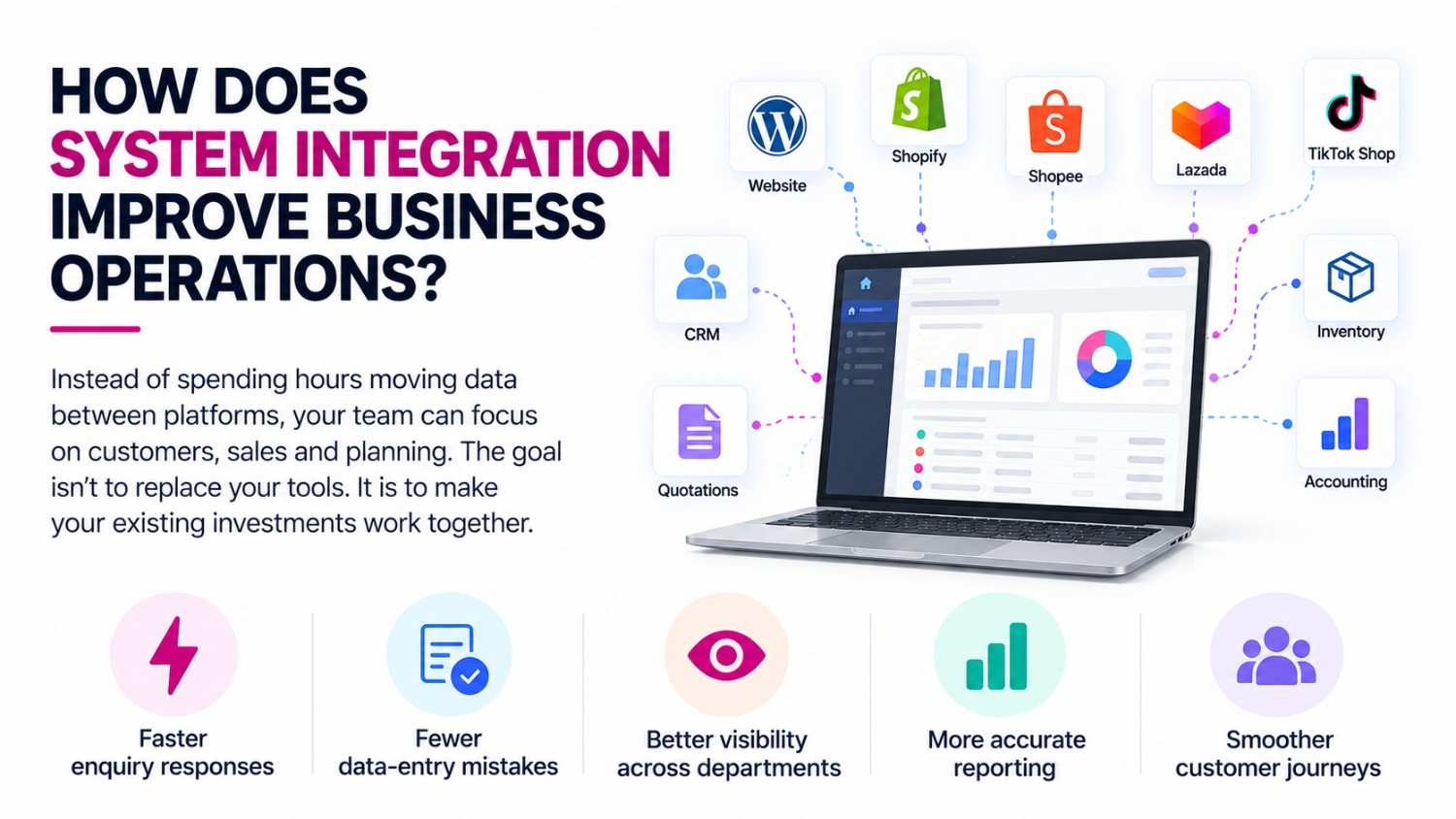
Instead of spending hours moving data between platforms, your team can focus on customers, sales and planning. Typical gains include faster enquiry responses, fewer data-entry mistakes, better visibility across departments, more accurate reporting and smoother customer journeys. The goal isn’t to replace your tools. It is to make your existing investments work together.
Is your business ready for system integration?
You may be ready if website enquiries are followed up manually, sales staff update customer details in several systems, inventory is kept apart from sales platforms, or finance re-enters order information.
Hold off if your processes still change frequently, you use very few digital tools, your current systems don’t yet meet core needs, or nobody owns the process.
What are the common system integration mistakes?
- Adding more software instead of improving existing workflows
- Integrating without clear business objectives
- Ignoring the experience of employees and customers
- Treating integration as a one-time project instead of ongoing improvement
- Letting data become inconsistent. Under the PDPA, organisations must make reasonable efforts to keep personal data accurate and complete, as set out in the PDPC’s data protection obligations.
How does your website affect integration success?
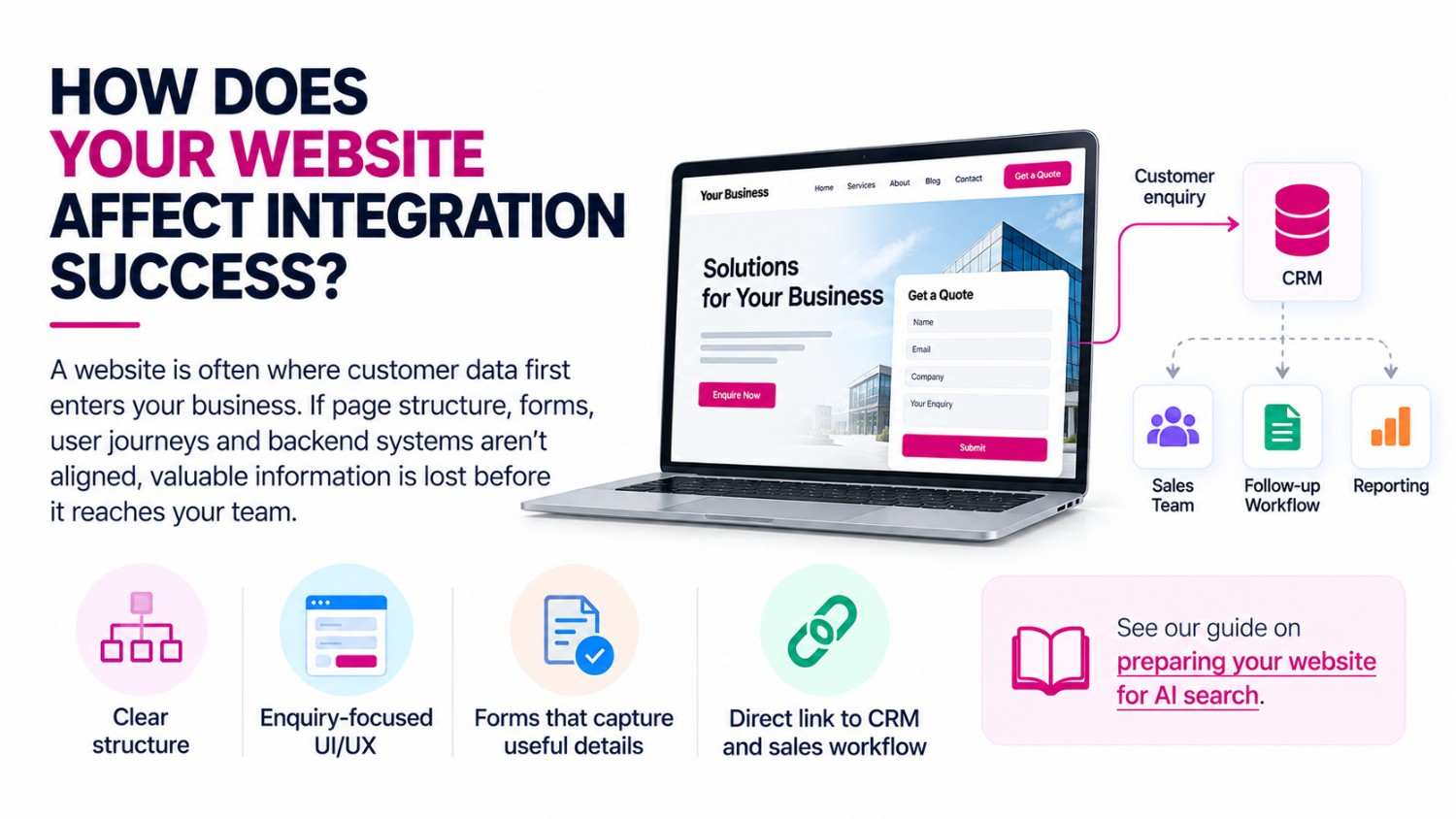
A website is often where customer data first enters your business. If page structure, forms, user journeys and backend systems aren’t aligned, valuable information is lost before it reaches your team. A well-built site has a clear structure, UI/UX that encourages enquiries, forms that capture useful details and a direct link to your CRM and sales workflow. Structured content also helps AI search engines read your pages, as we explain in our guide to preparing your website for AI search.
Getting started
- Review your systems and list the repeated manual tasks.
- Map how customer, sales, product and financial data currently moves.
- Prioritise the integrations with the biggest operational impact.
- Improve your website and digital touchpoints before connecting new systems.
- Monitor results and adjust as the business grows.
Budgeting for the project? See how Singapore SMEs fund a digital project.
How eFusion Technology Can Help You Connect Your Systems
eFusion Technology has spent over 20 years helping Singapore businesses plan, scope and build websites, e-commerce stores and digital systems, so we know where data gets stuck between them.
Our services cover:
- CTO-as-a-Service to map your workflows, pick the highest-impact integration first and choose tools that fit what you already own
- Custom web apps and system integration that connect your website, CRM and operations so data enters once
- Omnichannel e-commerce and payment integration to keep orders, stock and payments in sync across your sales channels
- Website design and UI/UX with structured forms that capture useful customer information from the first enquiry
- SEO, AEO and GEO strategy so the content on your connected site is easy to find and cite
The goal isn’t to add more tools. It’s to make the ones you already pay for work together.
Conclusion: What should Singapore SMEs do next?
Owning many digital tools doesn’t create efficiency. The value comes when they share information and follow the way your business actually operates. Start with one workflow where staff copy data most often, fix it, and build from there.
Wondering where manual work is costing you the most? Speak to eFusion Technology about scoping your first integration.
FAQ
What is system integration for SMEs?
It connects different business platforms so information flows between them without repeated manual input.
Do SMEs need to replace existing software to integrate systems?
Not always. Many businesses can connect their current website, CRM, accounting, inventory and e-commerce platforms.
How does system integration reduce business costs?
It cuts repetitive admin, lowers data-entry errors and frees staff for higher-value work.
Can a website be integrated with a CRM and other business systems?
Yes. A properly structured website can pass enquiries and customer data into your CRM, sales and operational workflows.
How do I know if my business needs system integration?
If staff copy-paste between systems, check several platforms for updates or keep duplicate records, integration is worth evaluating.