
Is Your Brand Identity Built for the AI Era? A business can have a polished logo and still look inconsistent everywhere else. AI content, multiple digital channels, marketplaces, and social platforms are increasing the brand touchpoints businesses must manage. The challenge is no longer creating an attractive identity, it is creating a corporate identity system that stays recognisable wherever customers encounter the business.
For companies considering corporate identity design in Singapore or a wider business rebrand, this changes what a successful identity project should deliver.
Key Takeaways
- Corporate identity now needs to support AI-driven content at scale, with only 43% of organisations consistently following their own AI governance policies.
- Brand systems should connect visual identity, voice, digital experience, and governance.
- Website UI/UX is a critical expression of corporate identity.
- Rebranding should follow clear positioning, not replace it.
- The corporate identity design market is growing fastest in Asia-Pacific, driven by digital and AI adoption.
What Is Corporate Identity Design, and Why Does It Matter Now?
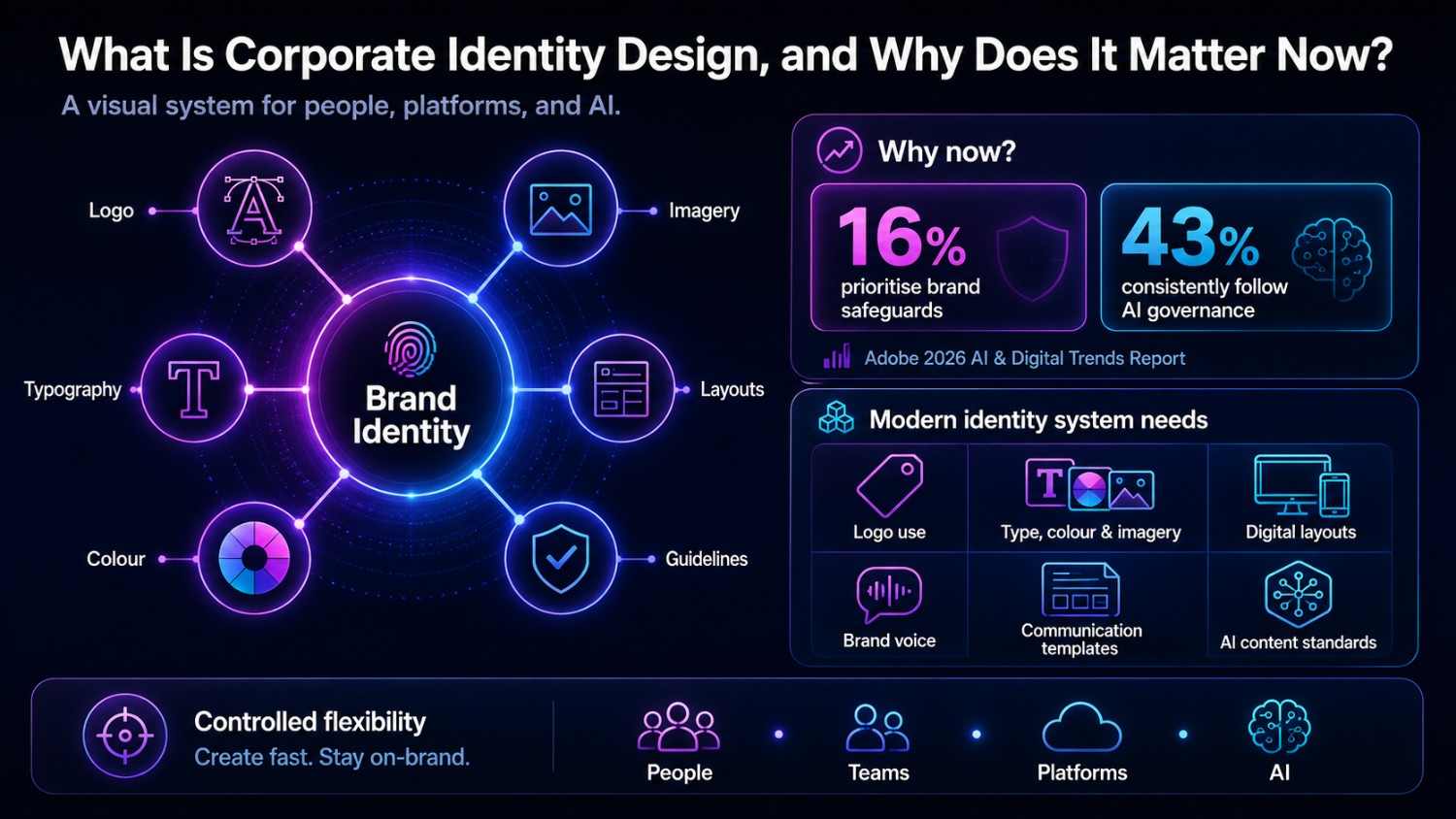
Corporate identity design is the visual and strategic system defining how a company presents itself: logo, typography, colour palette, imagery, graphic elements, layouts, and usage guidelines.
AI raises the stakes on that system. Adobe’s 2026 AI and Digital Trends Report found only 16% of organisations rank brand adherence safeguards a top priority when deploying AI agents, and just 43% consistently follow their own AI governance policies, a gap that shows up fastest in inconsistent visuals and copy.
A modern identity must work for people, agencies, digital platforms, and AI-supported workflows.
What Does a Modern Brand Identity System Need?
A logo is only one component. A scalable identity should establish clear rules for:
- Logo variations and appropriate usage
- Typography, colour, imagery, and graphic language
- Digital layouts and interface applications
- Brand voice and content direction
- Templates for recurring business communications
- AI-generated visual and content standards
The objective is controlled flexibility: teams should create new materials quickly without reinventing the brand each time.
Is Your Business Ready for a Rebrand?
A rebrand deserves priority when the current identity no longer reflects the company’s positioning, teams produce inconsistent materials, digital applications feel outdated, or expansion into new services and markets has fragmented the brand.
Rebranding is a real undertaking: Bynder’s 2026 research puts the average rebrand at around 215 assets updated over roughly seven months, with updating marketing materials cited as the hardest part, precisely the coordination problem AI content is now multiplying.
When Should You Not Prioritise Rebranding Yet?
Rebranding may not be the first priority when the real problem is unclear positioning, weak product-market fit, or an unresolved customer proposition.
A new visual identity cannot compensate for uncertainty about what the company represents.
What Corporate Identity Design Mistakes Should Businesses Avoid?
Common problems include redesigning only the logo, chasing short-term visual trends, writing guidelines that are hard to apply, and overlooking website or mobile environments.
Another risk is introducing AI tools without defining what on-brand output looks like.
How Should Corporate Identity Connect With Website Design?
A corporate website is where identity becomes an experience.
Website clarity, UI/UX, and information structure translate brand principles into navigation, hierarchy, calls to action, and content, helping visitors understand the company faster and move toward an enquiry.
Corporate identity and conversion-focused website design should be planned as one system.
How Can Businesses Implement a Rebrand Practically?
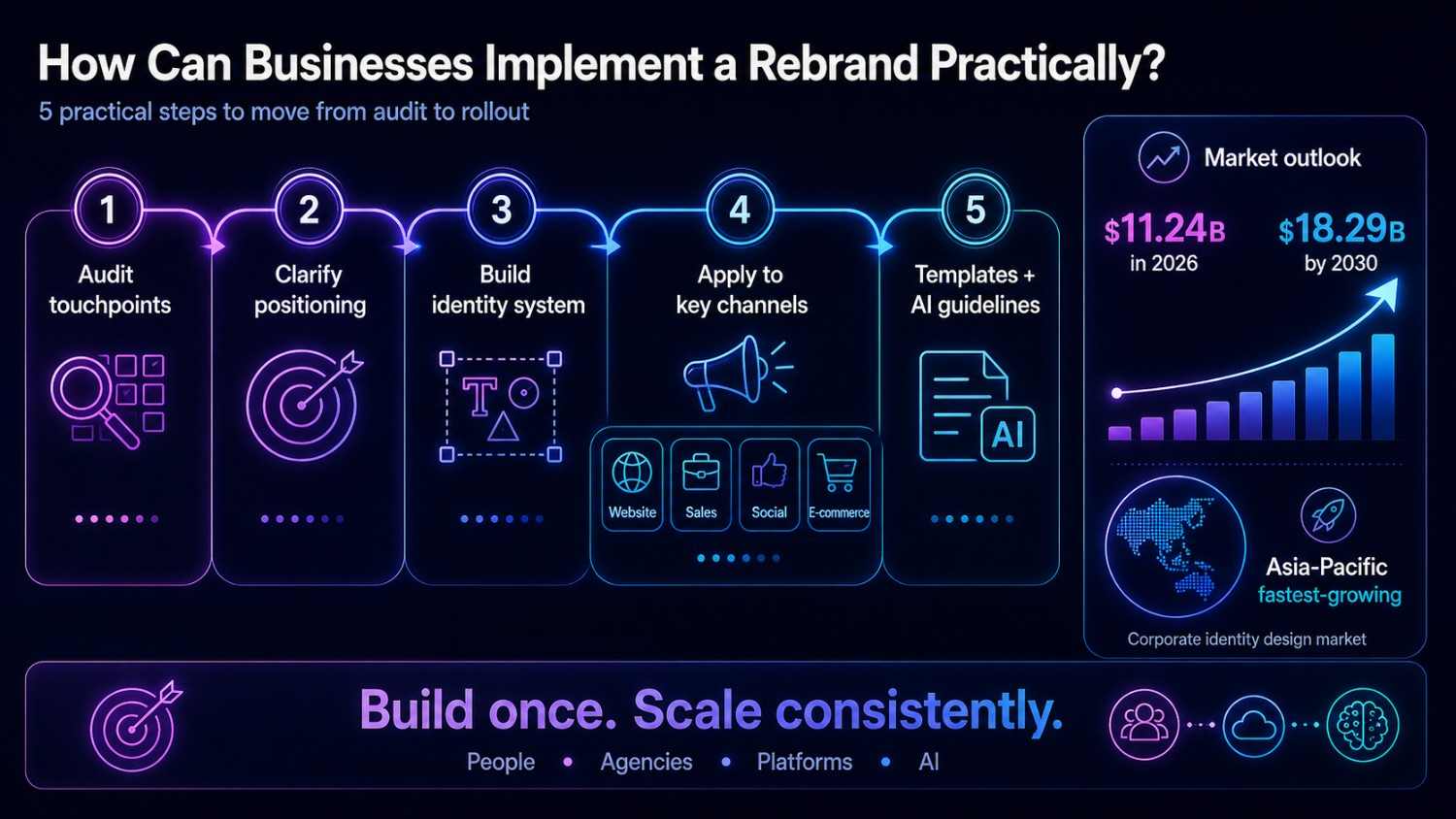
Start by auditing existing brand touchpoints, then clarify positioning before changing visual elements. Build a flexible identity system, document practical rules, and apply it first to high-impact channels: website, sales materials, social media, and e-commerce.
Finally, set templates and AI content guidelines so consistency survives after launch. Demand is following this shift: the corporate identity design market is forecast to grow from $11.24 billion in 2026 to $18.29 billion by 2030, with Asia-Pacific named the fastest-growing region as digital channels and AI-driven design take a bigger share of the work.
How Can eFusion Technology Help?
eFusion Technology has spent over 20 years helping Singapore businesses turn brand decisions into systems that hold up across every channel customers use.
Our services include:
- Web design and development, so a rebuilt identity is applied consistently across every page, not left as a static style guide
- SEO, AEO, and GEO strategy, so the new identity stays discoverable and correctly represented in search results and AI-generated answers
- AIGC content production, built against your brand guidelines so AI-assisted content stays on-voice at scale
- E-commerce platform management (Shopify, SHOPLINE, Shopee, Lazada, TikTok Shop), so the identity carries through on every marketplace customers shop on
We build from your existing brand rules rather than starting over — the priority is a system that holds together everywhere customers meet it.
What Should Businesses Take Away From Rebranding in 2026?
A successful rebrand should create a system, not just a logo. The strongest corporate identities are distinctive, digitally adaptable, easy to govern, and clear enough to guide both human and AI-assisted content creation.
If your current identity cannot scale with how your business now communicates, it may be time to evaluate what needs to change.
FAQ
What does corporate identity design include?
It includes logos, colours, typography, imagery, graphic systems, templates, and brand usage guidelines.
How is corporate identity different from branding?
Branding covers the wider perception and positioning of a business. Corporate identity defines how that brand is expressed consistently.
When should a company consider a business rebrand?
Consider one when positioning, audiences, services, or digital channels have changed significantly.
How does AI affect corporate identity design?
AI increases content volume, making clear brand rules and reusable systems more important.
Why hire a corporate identity design company in Singapore?
A professional partner can connect brand strategy with practical applications across websites, digital content, e-commerce, and customer touchpoints.