

Are you ready for a world where AI decides which businesses get found online? As AI-powered search tools evolve, traditional SEO alone is no longer enough to guarantee visibility. Customers will increasingly rely on AI to deliver precise answers, meaning websites must be clear, structured, and easy for both humans and AI to navigate.
Companies that delay adapting risk losing engagement, leads, and credibility, while those that act now gain a significant competitive advantage in discovery, conversion, and long-term digital growth.
Key Takeaways
- AI search prioritizes clarity, speed, and structured content.
- Information architecture and UX directly affect discoverability.
- Structured data and semantic content are critical for AI visibility.
- AI-friendly websites improve lead generation and engagement.
- Early adaptation ensures competitive advantage.
7 Essential Changes to Prepare Your Website for AI Search
Optimize Content for Semantic Understanding
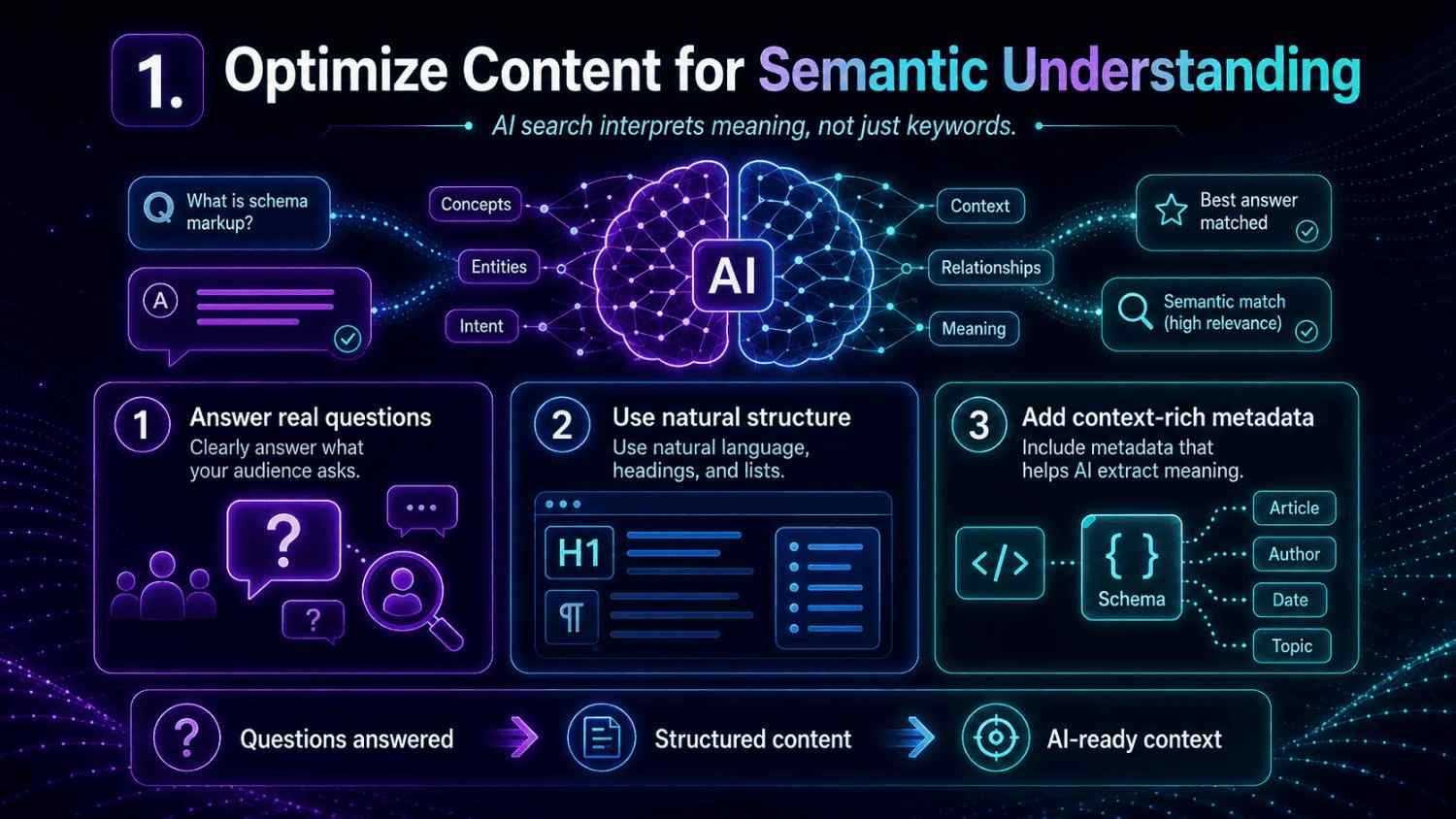
AI search interprets meaning, not just keywords. Ensure content:
- Clearly answers questions your audience asks.
- Uses natural language, headings, and structured lists.
- Includes context-rich metadata for AI extraction.
Simplify Information Architecture
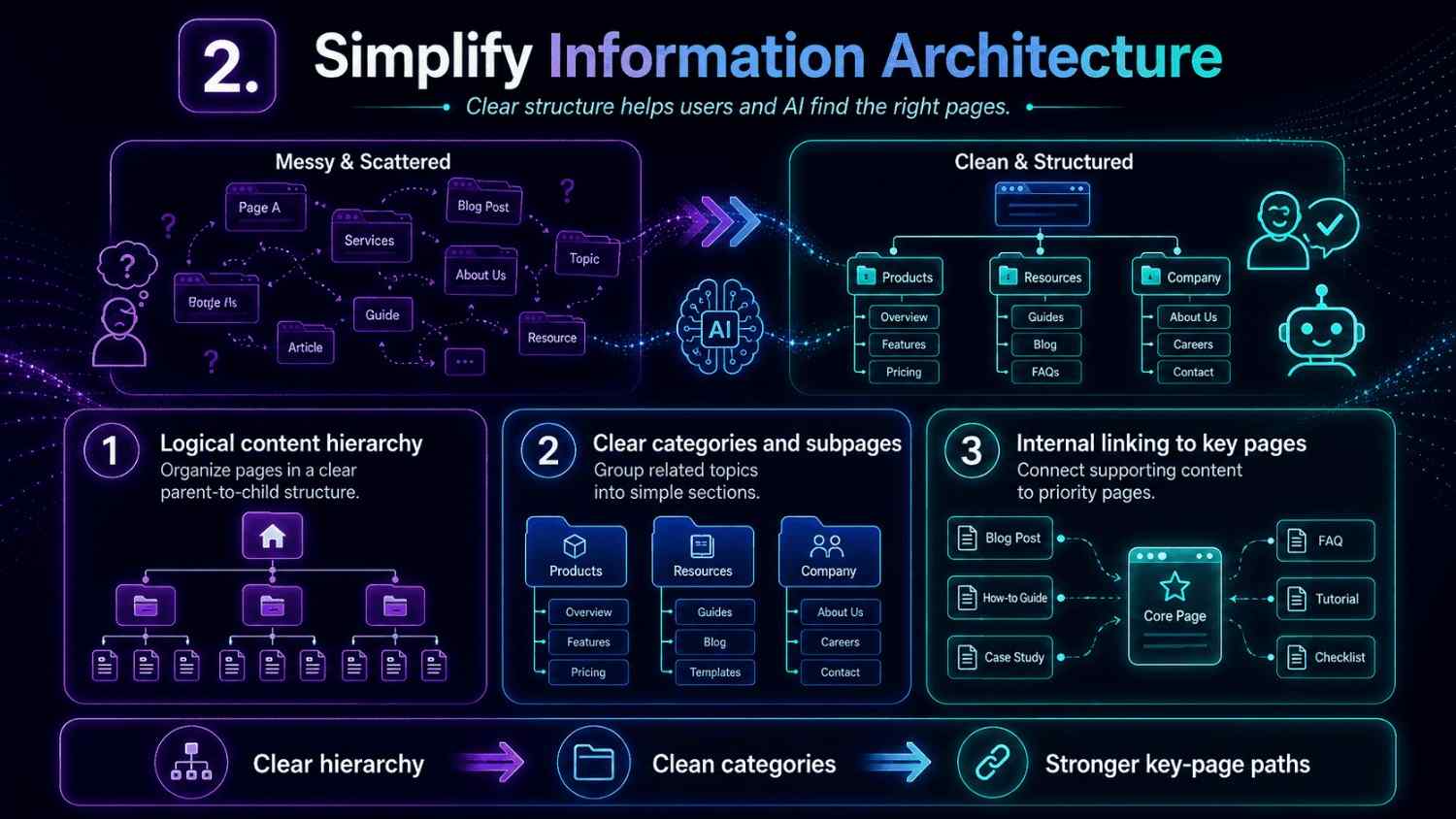
Websites with complex menus or scattered information confuse both users and AI. Focus on:
- Logical content hierarchy.
- Clear categories and subpages.
- Internal linking that highlights key pages.
Improve Page Speed and Mobile Responsiveness
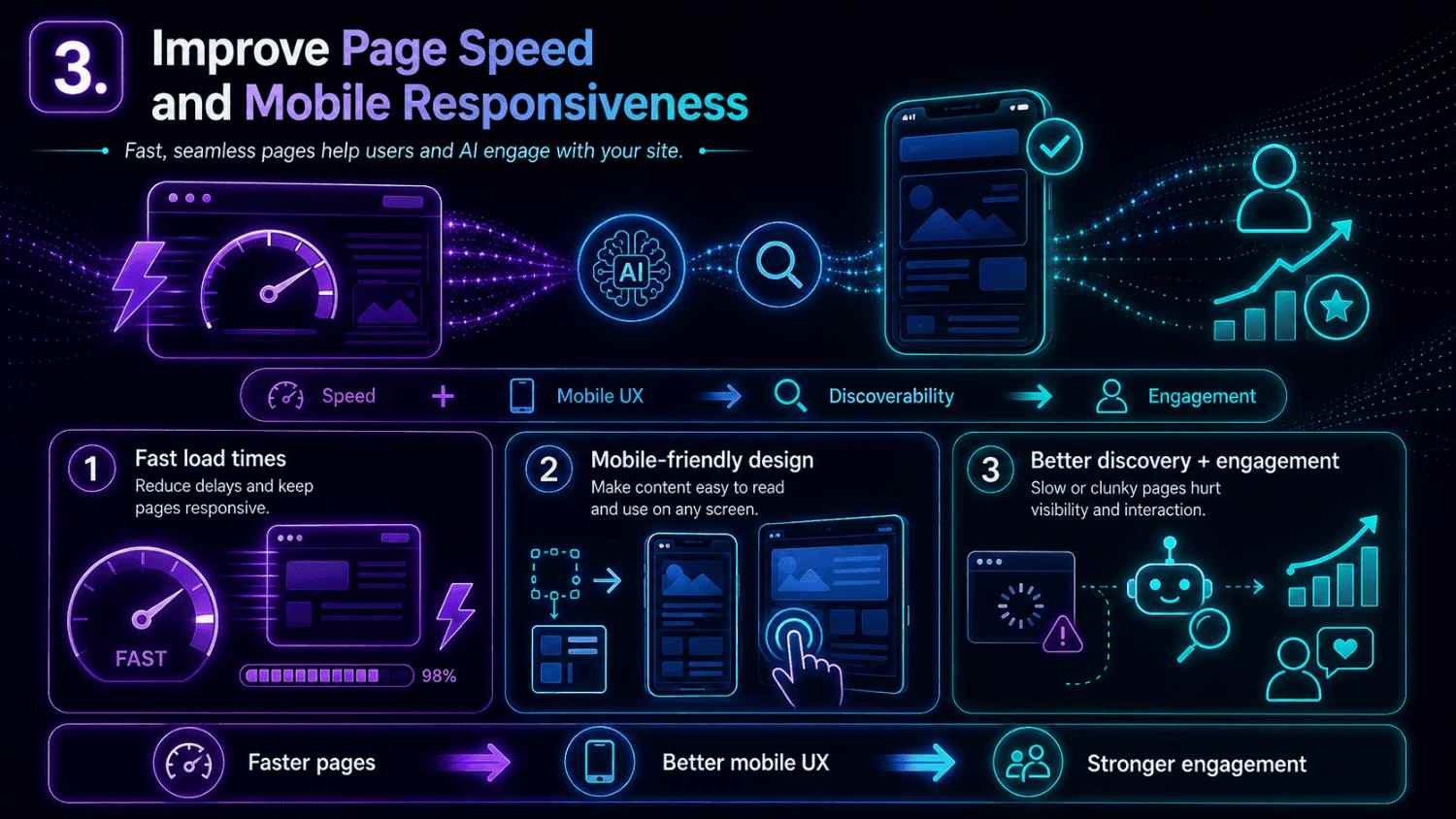
AI search favors websites that deliver fast, seamless experiences. Slow or mobile-unfriendly pages reduce discoverability and engagement.
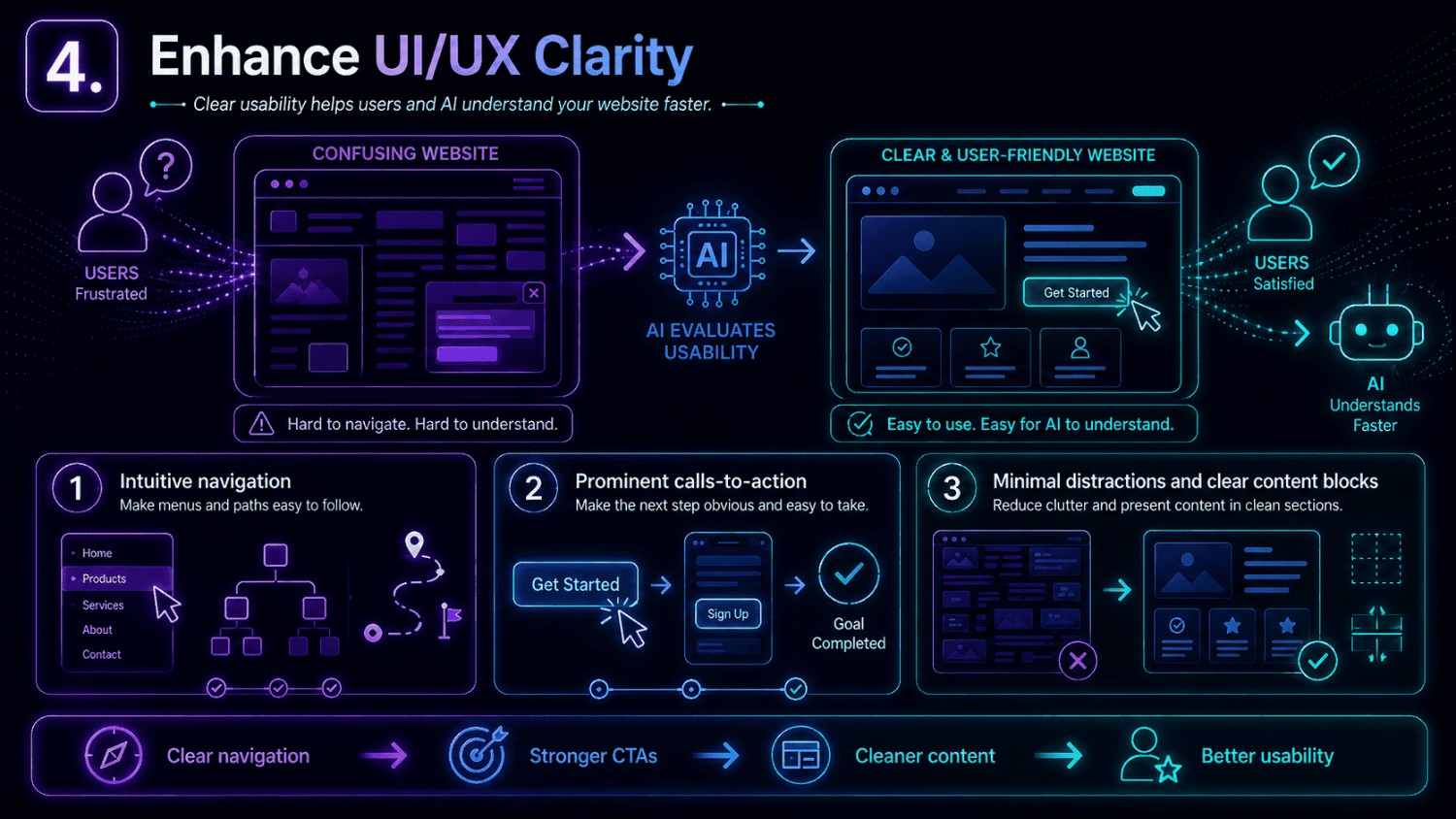
AI tools evaluate the usability of websites. Ensure:
- Intuitive navigation.
- Prominent calls-to-action.
- Minimal distractions and clear content blocks.
Implement Structured Data and Schema Markup
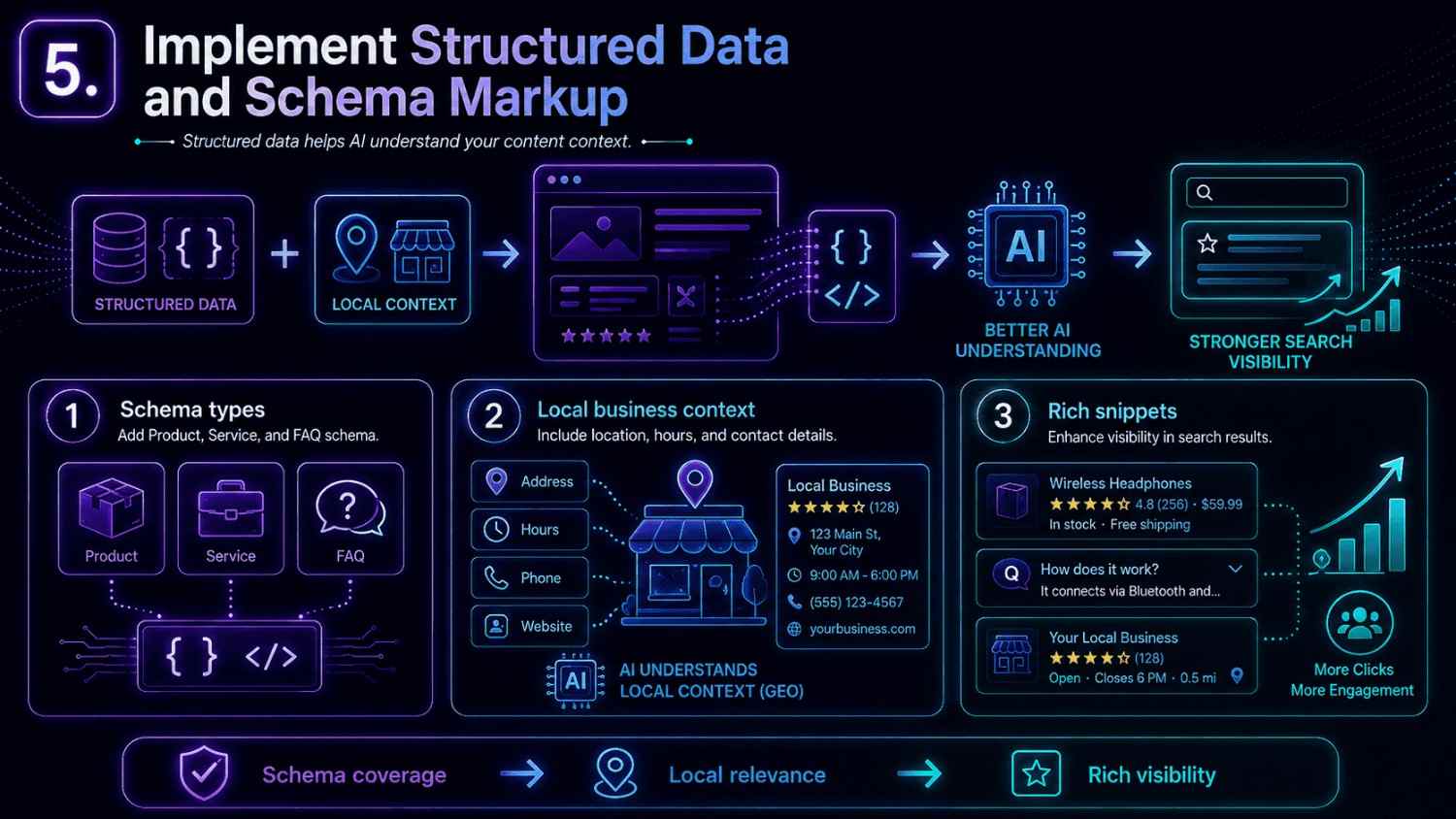
Structured data helps AI understand your content context. Include:
- Product, service, and FAQ schema.
- Local business information for GEO optimization.
- Rich snippets to enhance search visibility.
Audit and Consolidate Content
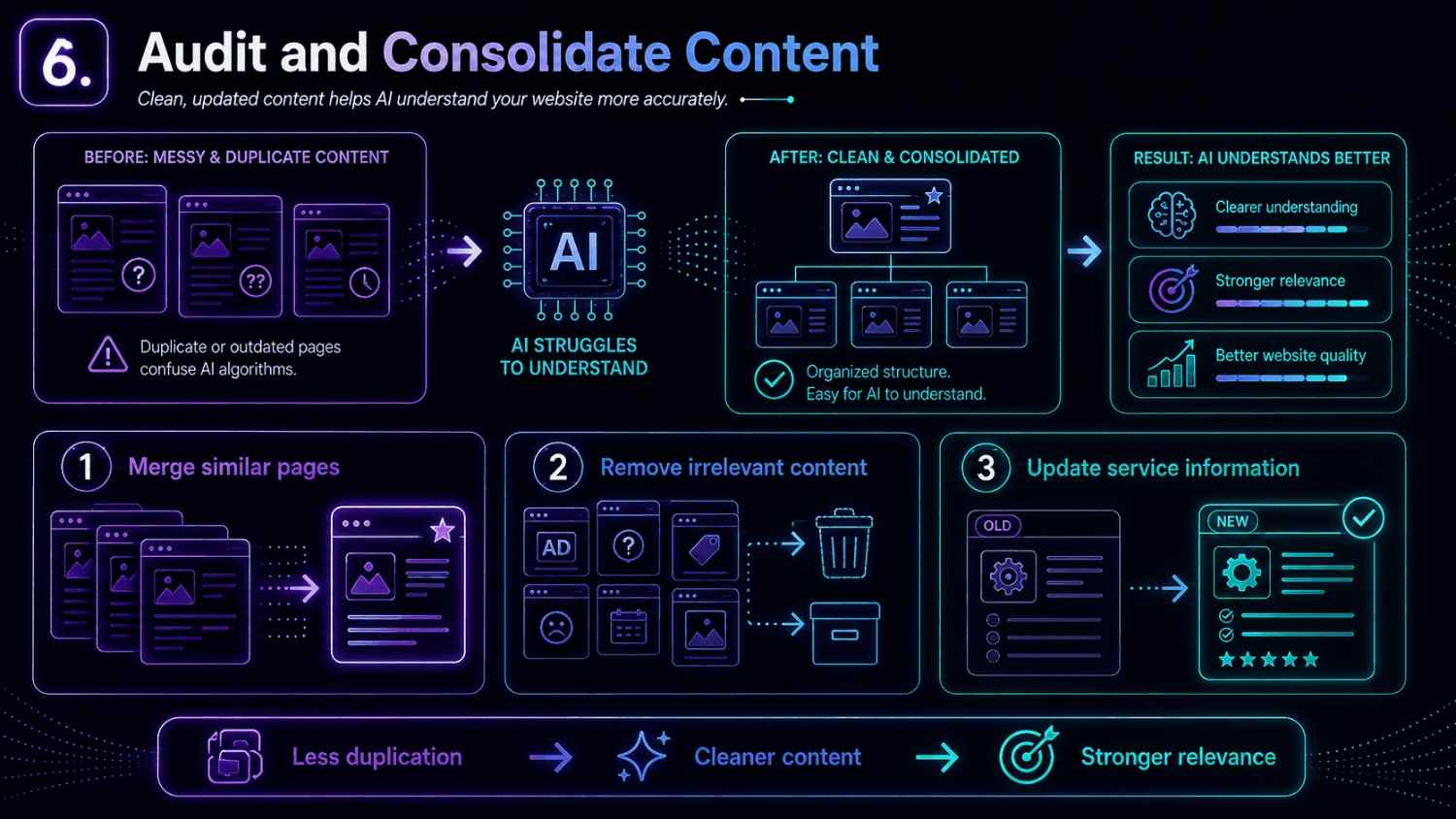
Duplicate or outdated pages confuse AI algorithms. Take steps to:
- Merge similar pages.
- Remove irrelevant content.
- Update information to reflect current services.
Prepare for AI-Generated Interactions
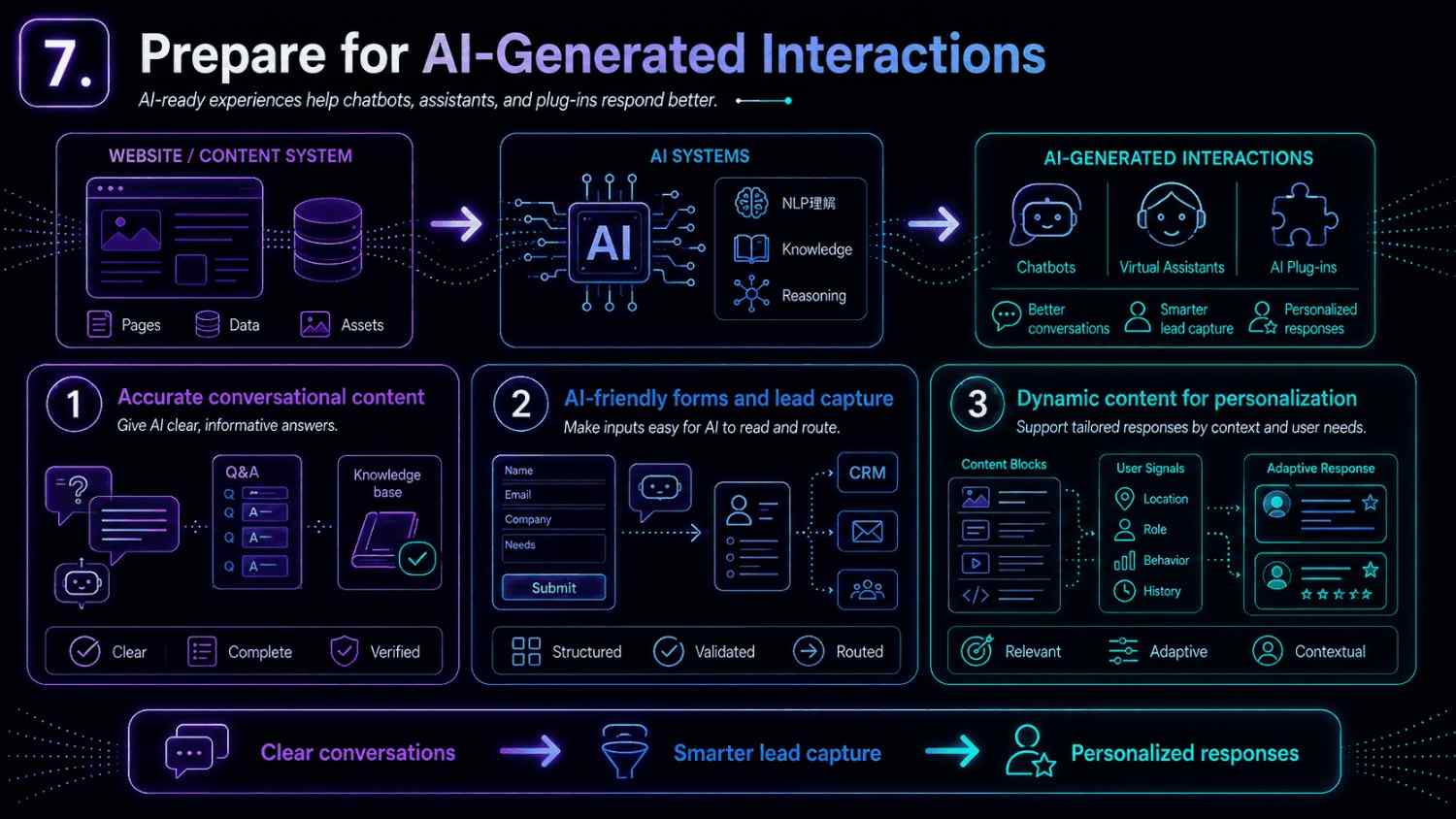
Chatbots, virtual assistants, and AI plug-ins are becoming standard. Ensure:
- Conversational content is accurate and informative.
- Forms and lead capture are AI-friendly.
- Dynamic content supports personalized responses.
Conversion-Focused Website Design Angle
AI search success aligns with strong website fundamentals:
- Website clarity: Simplifies navigation for users and AI.
- UI/UX optimization: Reduces bounce rates and improves engagement.
- Information structure: Supports AI interpretation and rich snippets.
- Lead generation: Clear forms and CTAs enhance conversion.
How eFusion Technology Can Help
eFusion Technology treats AI search readiness as a strategic system rather than a one-off task.
By combining website design, content strategy, and AI-focused optimization, eFusion helps businesses ensure their sites are discoverable, understandable, and effective at converting traffic:
- Web Design and Development Craft websites with intuitive layouts and logical content flow so AI tools can accurately interpret key information
- UI/UX Optimization Enhance navigation and interaction to improve user engagement while making the site more AI-friendly
- E-commerce and Service Pages Structure products and services with clear categories, metadata, and schema to support AI discovery and recommendations
- Intent-Driven Content Strategy Produce content designed around common queries, natural language, and context for better AI visibility
- AI-Optimized SEO and Local Strategy Align search elements, tags, and local information to match AI search patterns and regional relevance
The focus is not only on attracting AI-driven traffic but also on converting it into actionable leads and measurable results.
Conclusion
Visibility in AI search does not automatically translate into business results. Success comes from designing websites that are easy for AI to read, simple for users to navigate, and structured to guide decisions.
Companies that prioritize organized content, intuitive design, and AI-aligned strategy are more likely to transform discovery into engagement and revenue.
The challenge is strategic: bridging the gap between being found by AI and being chosen by the user. Preparing for AI search requires careful planning of content, layout, and interaction from the first click to the final decision.
If your website is not yet optimized for AI discovery and conversion, it is time to evaluate and implement a strategy focused on clarity, structure, and measurable impact.
Connect with eFusion Technology to explore how your website can be designed to thrive in an AI-driven search landscape.
FAQ
What is AI search?
AI search uses artificial intelligence to interpret user queries and content context, providing precise answers rather than a list of links.
How does AI search affect website traffic?
Websites with clear, structured content and fast load times are more likely to be prioritized by AI, increasing visibility.
Do I need to rewrite all my content for AI search?
Not entirely. Focus on clarity, context, and structured information, updating outdated or duplicate content.
What website features help AI understand content?
Structured data, FAQ pages, logical content hierarchy, and metadata all help AI interpret your website.
Can e-commerce websites benefit from AI search optimization?
Yes. Optimized product pages, rich snippets, and AI-friendly navigation improve both discoverability and conversions.