

How can businesses create a seamless customer journey when customers move across so many channels? Today, buyers discover products on social media, compare them on websites, ask questions through messaging apps, and often complete purchases on marketplaces.
The challenge is not the number of channels but the fragmentation of customer data across them. When these interactions remain disconnected, businesses lose visibility into the full journey. Modern omnichannel strategies therefore focus on orchestrating customer data, with AI helping organise these signals into clearer insights.
Key Takeaways
- Omnichannel connects all customer interactions across channels into one platform.
- AI helps businesses interpret customer behaviour, automate operations, and optimise merchandising decisions.
- The most effective omnichannel systems are built on structured data, strong UX design, and scalable integrations.
- Businesses should implement omnichannel progressively instead of attempting large system transformations.
What Is an AI-Powered Omnichannel Strategy?
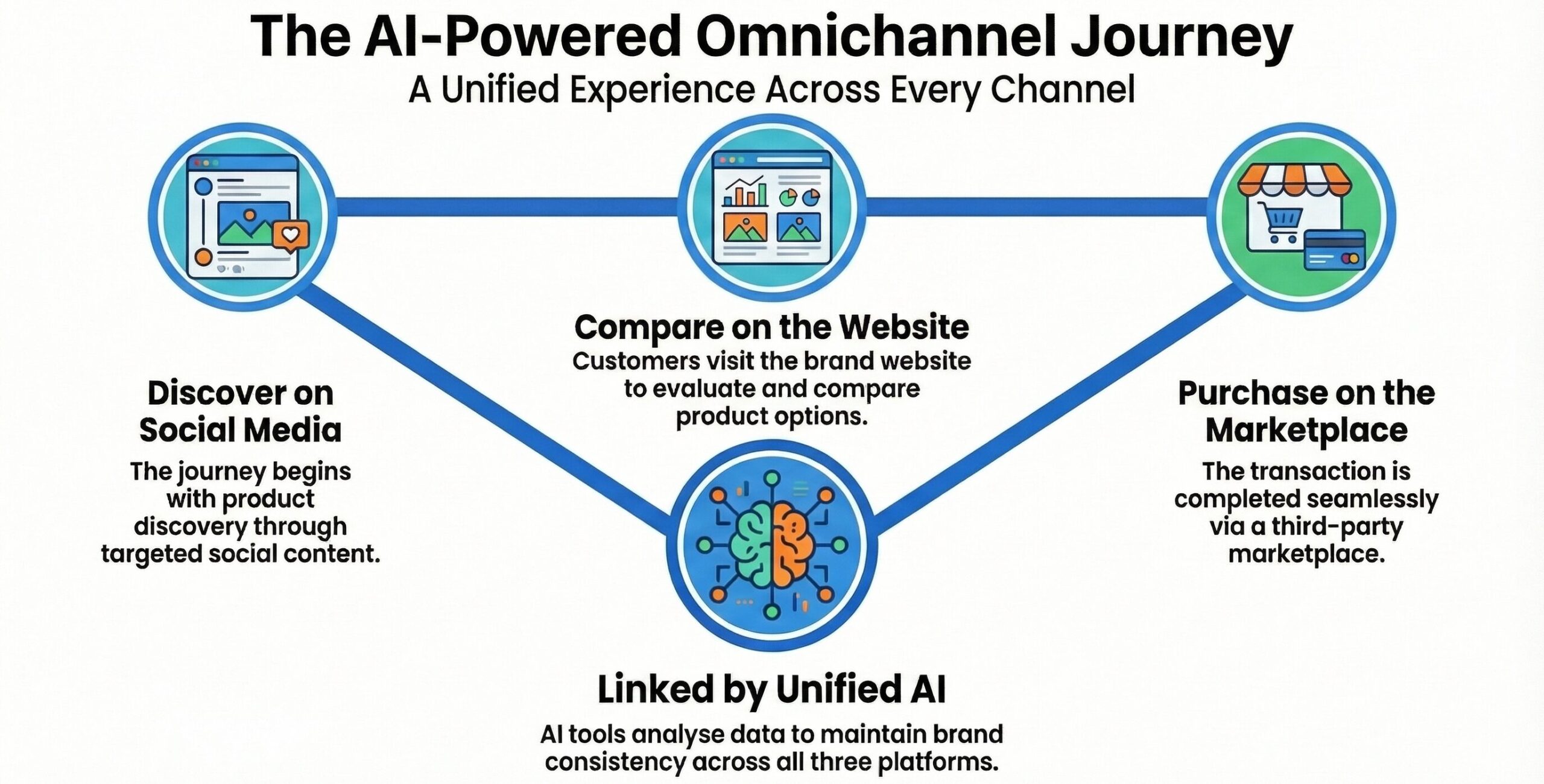
An AI-powered omnichannel strategy connects all customer touchpoints such as websites, marketplaces, and messaging platforms into one coordinated system where AI tools help analyse data, automate workflows, and support personalised customer experiences.
In practice, this means a customer’s interaction on one channel can inform the experience on another.
For example:
- First, a customer discovers a product on social media
- Then, they visit the website to compare options
- Finally, they complete the purchase through a marketplace
Ideally, the brand recognises the customer across these steps and maintains a consistent experience.
What Role Does AI Play in Omnichannel Commerce?
AI helps businesses manage the complexity created by multiple channels.
Common applications include:
- Customer behaviour analysis to identify purchase patterns
- Product recommendation engines based on browsing history
- Demand forecasting for inventory planning
- AI-assisted support tools that answer common questions
- Marketing optimisation using unified analytics
When Should Businesses Implement Omnichannel Systems?
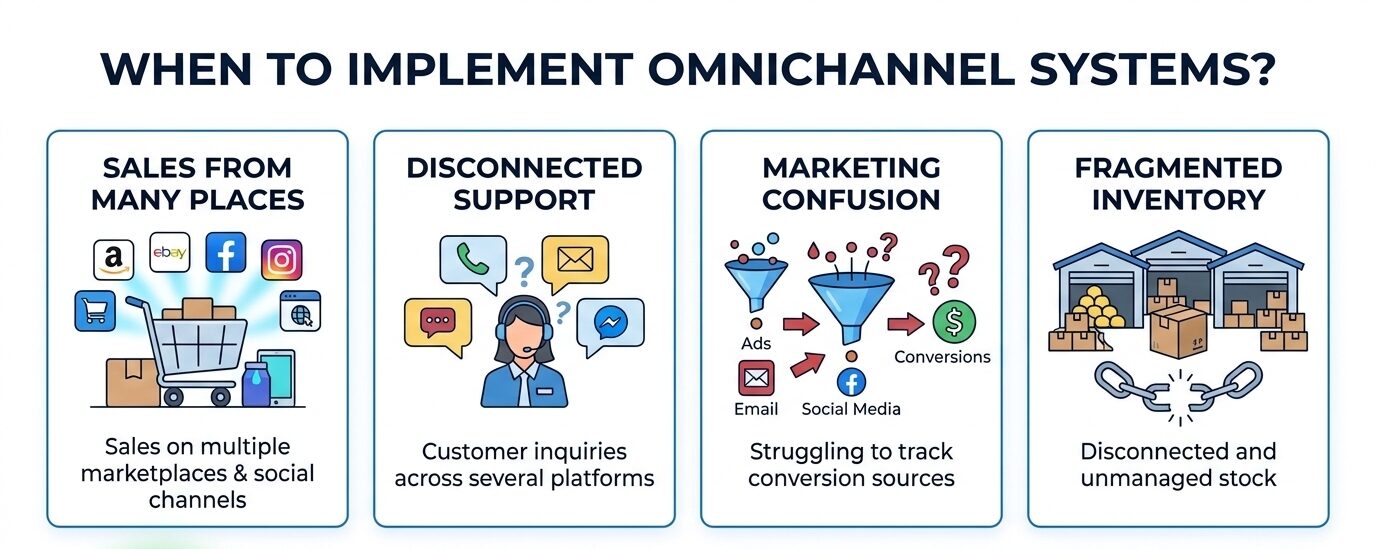
You may benefit from omnichannel integration if:
- Sales occur across multiple marketplaces and social channels
- Customer support inquiries come from several platforms
- Marketing teams struggle to identify conversion sources
- Inventory management becomes fragmented
However, businesses should avoid over-engineering systems if most revenue still comes from a single channel.
Why Website Experience Still Matters in Omnichannel
Even when sales occur across marketplaces and social platforms, the brand website often remains the central information hub. Customers frequently return to the website to verify product information, compare options, or confirm brand credibility.
For this reason, website architecture still plays a critical role in omnichannel performance.
Effective websites support omnichannel systems through:
- intuitive navigation
- clear information structure
- reliable checkout flows
- consistent performance across devices
AI workflows such as merchandising insights, support automation, and behavioural analytics can further enhance these systems.
Businesses exploring omnichannel capabilities often start by strengthening their website foundation through solutions such as:
Conclusion
Omnichannel strategies are no longer just about expanding sales channels. The real challenge now lies in coordinating customer data, operational systems, and digital experiences across multiple touchpoints.
AI can assist with analysis, automation, and optimisation, but successful omnichannel systems still rely on strong digital infrastructure and thoughtful experience design.
With over 20 years of experience building scalable digital platforms, eFusion Technology supports businesses in developing practical omnichannel infrastructure that grows alongside their operations.
If you are exploring omnichannel improvements, contact us so we can help you identify the most impactful opportunities for your business!
FAQ
What is an AI-powered omnichannel strategy?
It connects multiple customer touchpoints such as websites, marketplaces, and messaging platforms while AI tools analyse data and automate workflows.
How does omnichannel improve customer experience?
Customers receive consistent information, support, and purchasing options across all platforms.
Is omnichannel necessary for small businesses?
Not always. Businesses with limited sales channels may first benefit from improving website UX and analytics.
What role does AI play in omnichannel commerce?
AI helps analyse customer behaviour, automate support, forecast demand, and personalise product recommendations.
What is the difference between multichannel and omnichannel?
Multichannel uses several independent sales platforms. Omnichannel integrates them into one connected customer journey.