
Singapore shoppers have good reason to be cautious. According to the Singapore Police Force, e-commerce scams were the most reported scam type in the first half of 2026, increasing 19.3% to 3,865 cases, with losses reaching approximately S$8.3 million.
For legitimate merchants, this creates a business challenge: customers may hesitate to purchase from unfamiliar websites.
A trustworthy online store must therefore do more than look professional. It must demonstrate credibility, protect transactions and make purchasing straightforward.
Key Takeaways
- E-commerce scams were Singapore’s most reported scam type in H1 2026.
- Verifiable business information strengthens credibility.
- Secure, transparent checkout supports customer confidence.
- Website maintenance and consistent UX remain essential.
- Trust improvements should support measurable conversion goals.
Why Does Website Trust Matter for Singapore Businesses?
Most reported e-commerce scams involve online marketplaces or social platforms, but concerns about fraudulent sellers can influence shoppers elsewhere.
According to Baymard Institute’s 2026 checkout research, 19% of surveyed US shoppers who abandoned checkout for reasons other than browsing cited concerns about trusting websites with credit card information.
Although this is not Singapore-specific data, it illustrates why checkout confidence matters.
Website trust is both a customer protection responsibility and a conversion consideration.
What Makes an Online Store Look Trustworthy?
A credible e-commerce website combines verifiable business information, consistent branding, transparent policies and reliable payment processes.
Three areas deserve particular attention.
1. How Can Website Design Build Customer Confidence?
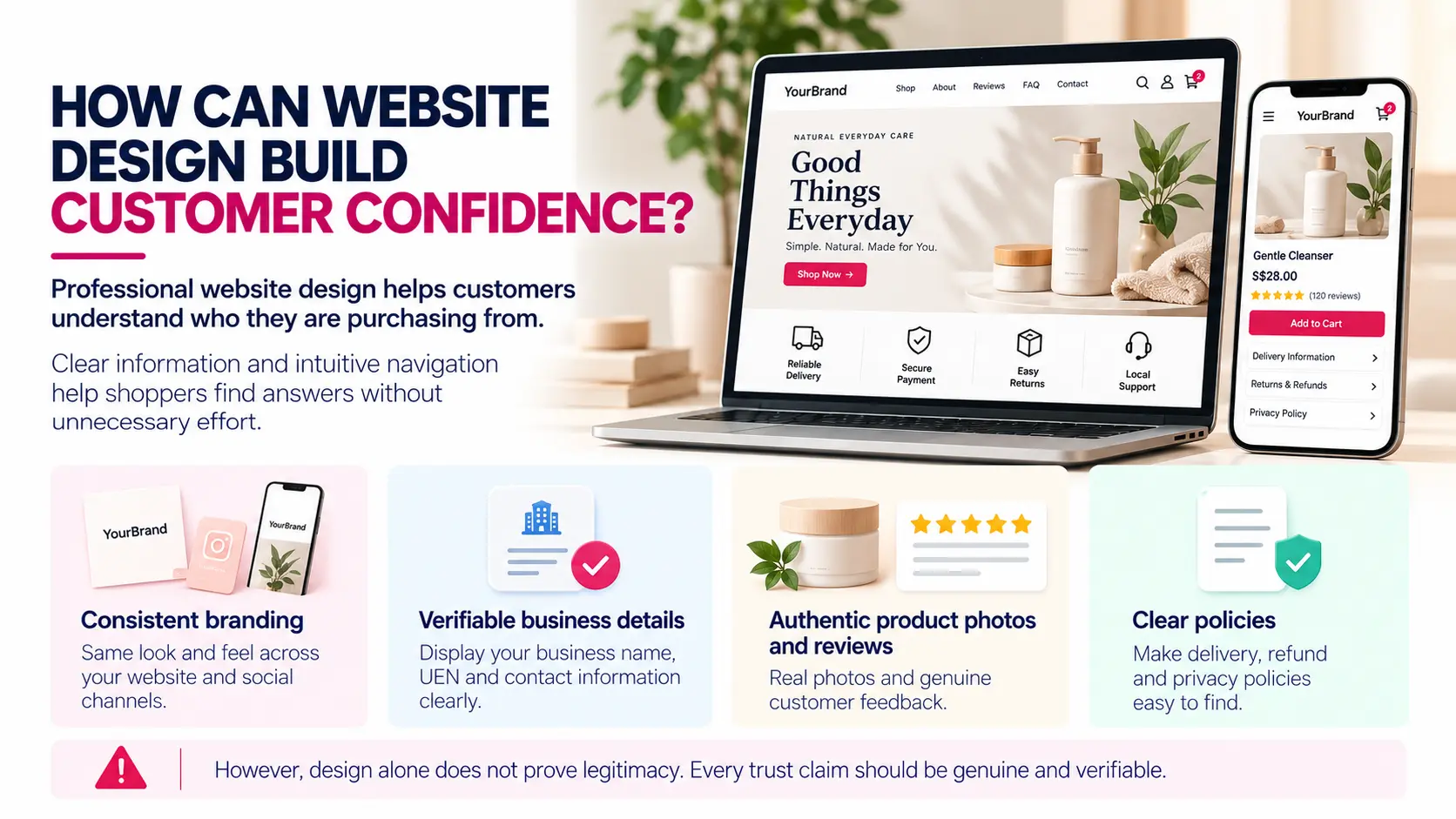
Professional website design helps customers understand who they are purchasing from.
Include:
- Consistent branding across your website and social channels.
- A verifiable business name, UEN and contact information.
- Authentic product photographs and customer reviews.
- Accessible delivery, refund and privacy policies.
Clear information structure and intuitive navigation help shoppers find answers without unnecessary effort.
However, design alone does not prove legitimacy. Every trust claim should be genuine and verifiable.
2. How Can You Make Checkout More Trustworthy?
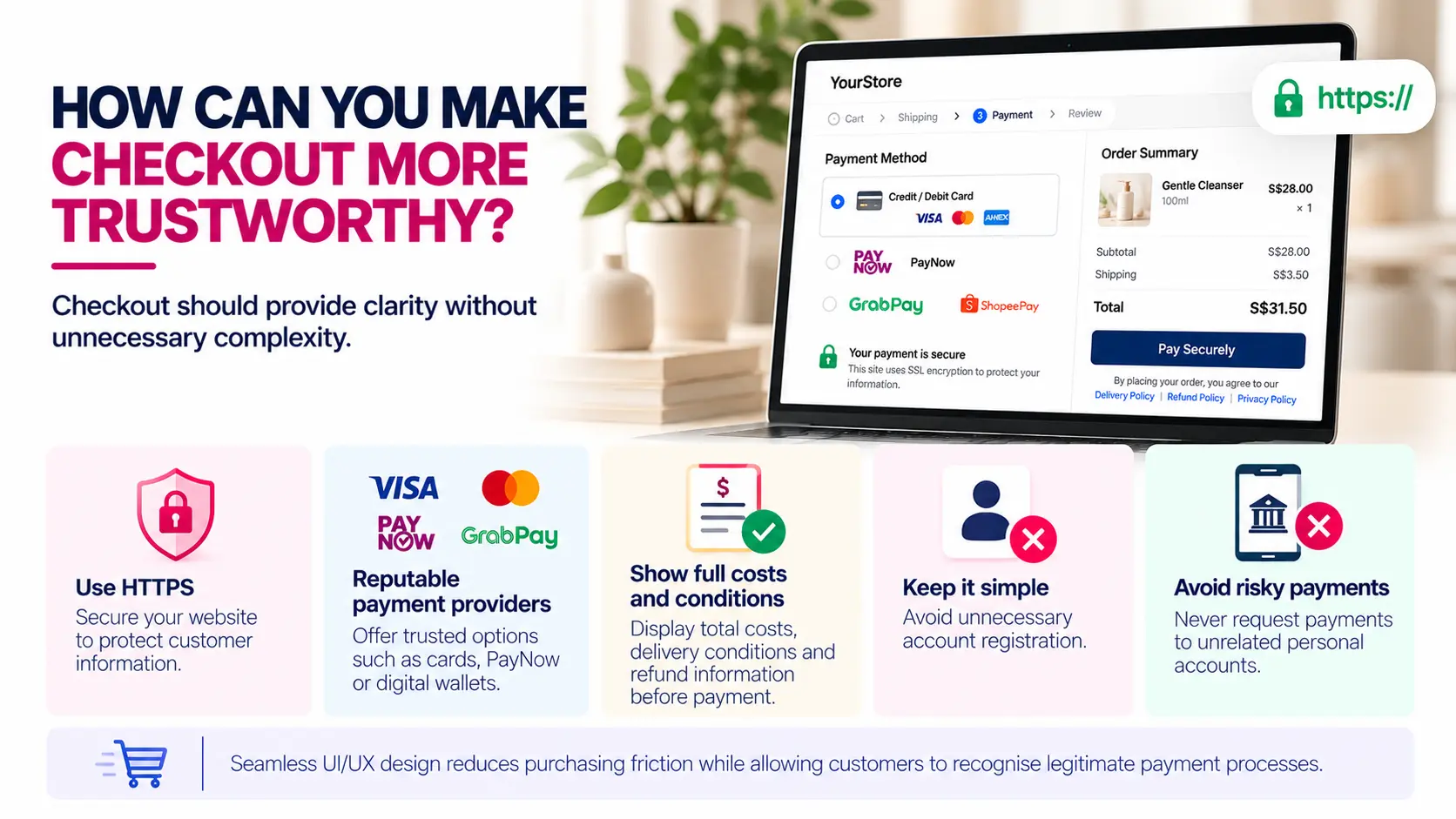
Checkout should provide clarity without unnecessary complexity.
Use HTTPS, reputable payment providers and suitable options such as cards, PayNow or digital wallets.
Display total costs, delivery conditions and refund information before payment confirmation.
Avoid unnecessary account registration and never request payments to unrelated personal accounts.
Seamless UI/UX design reduces purchasing friction while allowing customers to recognise legitimate payment processes.
3. How Does Website Maintenance Protect Customer Trust?
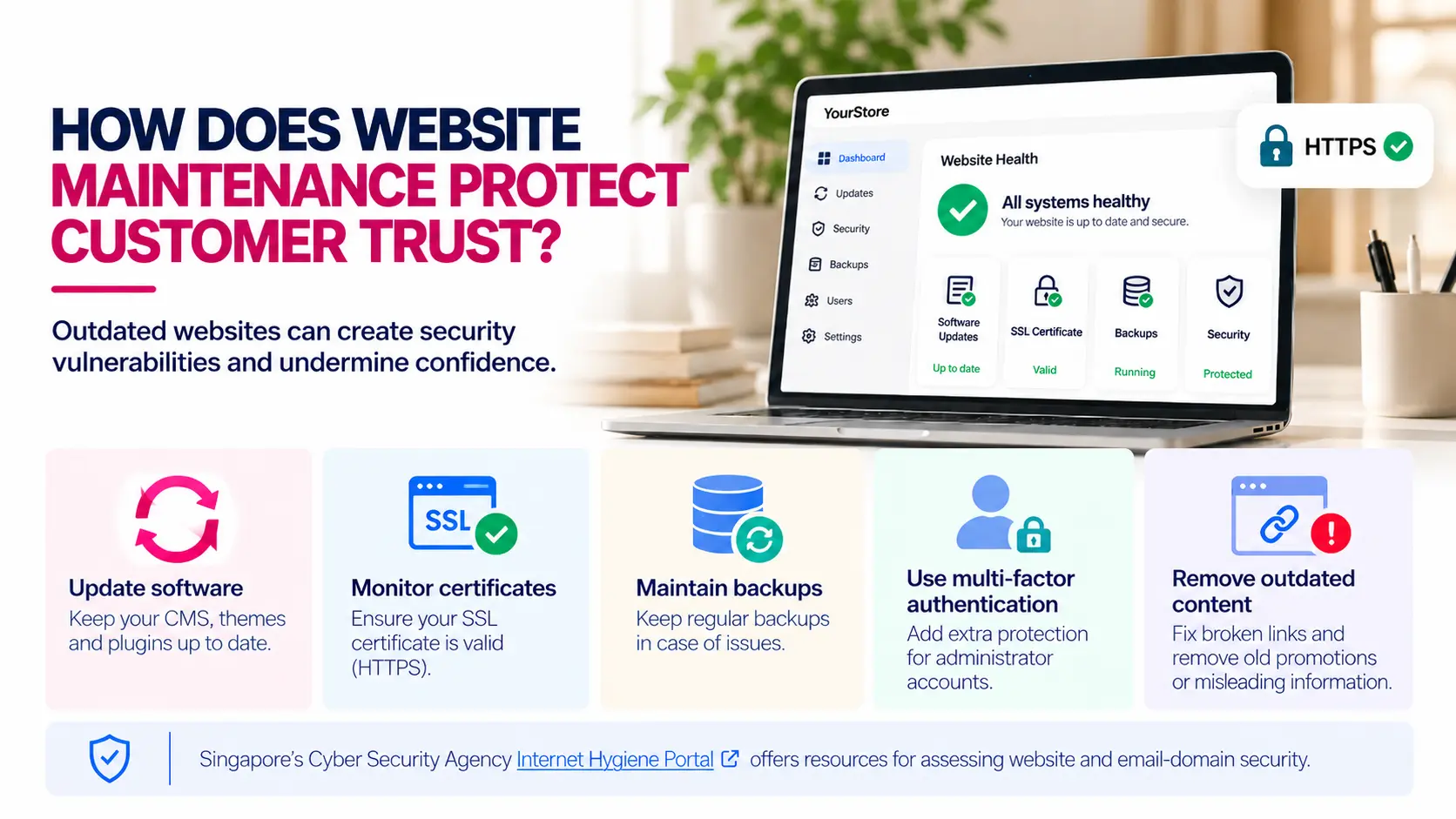
Outdated websites can create security vulnerabilities and undermine confidence.
Regularly update website software, monitor certificates, maintain backups and enable multi-factor authentication for administrators.
Singapore’s Cyber Security Agency Internet Hygiene Portal also offers resources for assessing website and email-domain security.
Remove broken links, outdated promotions and misleading information promptly.
Which Businesses Should Prioritise Website Trust Improvements?
A trust-focused website audit is especially relevant for businesses that:
- Sell directly to first-time customers.
- Handle online payments or customer information.
- Experience high checkout abandonment.
- Operate older websites with inconsistent branding.
Businesses facing unresolved payment failures or serious security issues should prioritise those problems before investing in cosmetic redesigns or additional advertising.
What Website Trust Mistakes Should Merchants Avoid?
Common mistakes include displaying unverifiable security badges, hiding refund policies, using inconsistent contact details and overlooking mobile checkout problems.
Another is assuming HTTPS alone guarantees a secure website. It encrypts connections but does not establish whether a merchant is legitimate.
How Can Singapore Merchants Improve Website Trust?
Start with a practical audit.
- Verify business details, policies and customer-facing information.
- Review mobile navigation and product-page clarity.
- Test payment methods and checkout completion.
- Check website security, updates and backups.
- Monitor checkout abandonment and customer enquiries.
These improvements can also support SEO, AEO and GEO by making business information clearer and easier to interpret.
How Can eFusion Technology Help?
eFusion Technology has spent over 20 years helping Singapore businesses build websites customers can rely on. For online merchants, that means understanding both sides of trust: how a store looks, and how safely it handles payments.
Our services include:
- Payment Integration: connecting your store to trusted local and international payment gateways, so customers can pay with familiar methods through a secure checkout.
- Corporate Identity Design: building a consistent logo, colour palette and visual style across your website and channels, helping first-time visitors see an established, credible business.
- Website Maintenance: handling updates, security patches, backups and monitoring, so your store stays secure and free of the broken pages that make shoppers hesitate.
- E-commerce Website: designing and developing stores on platforms such as Shopify and SHOPLINE, with clear policies and checkout flows that build confidence from the first click.
Whether you’re launching a new store or tightening up an existing one, we focus on practical fixes that make your business easier to trust and easier to buy from.
What Should Your Business Do Next?
As online scam awareness grows, customer trust deserves a permanent place in e-commerce planning.
Start by reviewing the information and purchasing experiences customers rely on most.
Discuss your website trust and conversion priorities with eFusion Technology to identify practical improvements.
Frequently Asked Questions
How can customers verify a Singapore online store?
They can check business details, UEN records, contact information, independent reviews and payment policies.
Does HTTPS prove an online store is legitimate?
No. HTTPS protects data in transit but does not verify merchant honesty.
Do trust badges improve e-commerce conversion?
Authentic, verifiable badges may reassure customers, but they cannot replace sound security and transparent policies.
Which payment options help build customer trust?
Recognised payment methods processed through reputable providers can provide a more familiar purchasing experience.
How often should an e-commerce website be maintained?
Review security updates promptly, monitor site health continuously and test checkout after important changes.