

Many Singapore SMEs collect customer details, employee records, enquiry forms, and transaction data every day — often without a clear owner for how it’s handled. Data protection usually gets attention only after something goes wrong: a complaint, an unclear consent process, or a question no one can answer confidently.
The common misconception is that only large enterprises need dedicated data protection support. In reality, every organisation covered under Singapore’s Personal Data Protection Act (PDPA) must designate a Data Protection Officer and make that DPO’s contact details publicly available. For SMEs with limited internal resources, DPO-as-a-Service offers a practical way to meet this obligation without building a full in-house compliance function.
Key Takeaways
- Singapore organisations must designate a DPO under PDPA.
- DPO-as-a-Service gives SMEs specialised support without a full-time hire.
- Data protection and website UX are closely connected.
- Clear processes improve both compliance and customer trust.
What Is DPO-as-a-Service?
DPO-as-a-Service is an outsourced arrangement where an external specialist supports — or takes on — an organisation’s DPO responsibilities. Instead of assigning compliance tasks to an employee with no data protection background, SMEs get professional guidance on PDPA compliance practices, data protection policies, personal data handling processes, risk reviews, and enquiry management.
As businesses lean more on websites, e-commerce platforms, CRM systems, and digital marketing tools, managing personal data responsibly has become a trust issue as much as a compliance one.
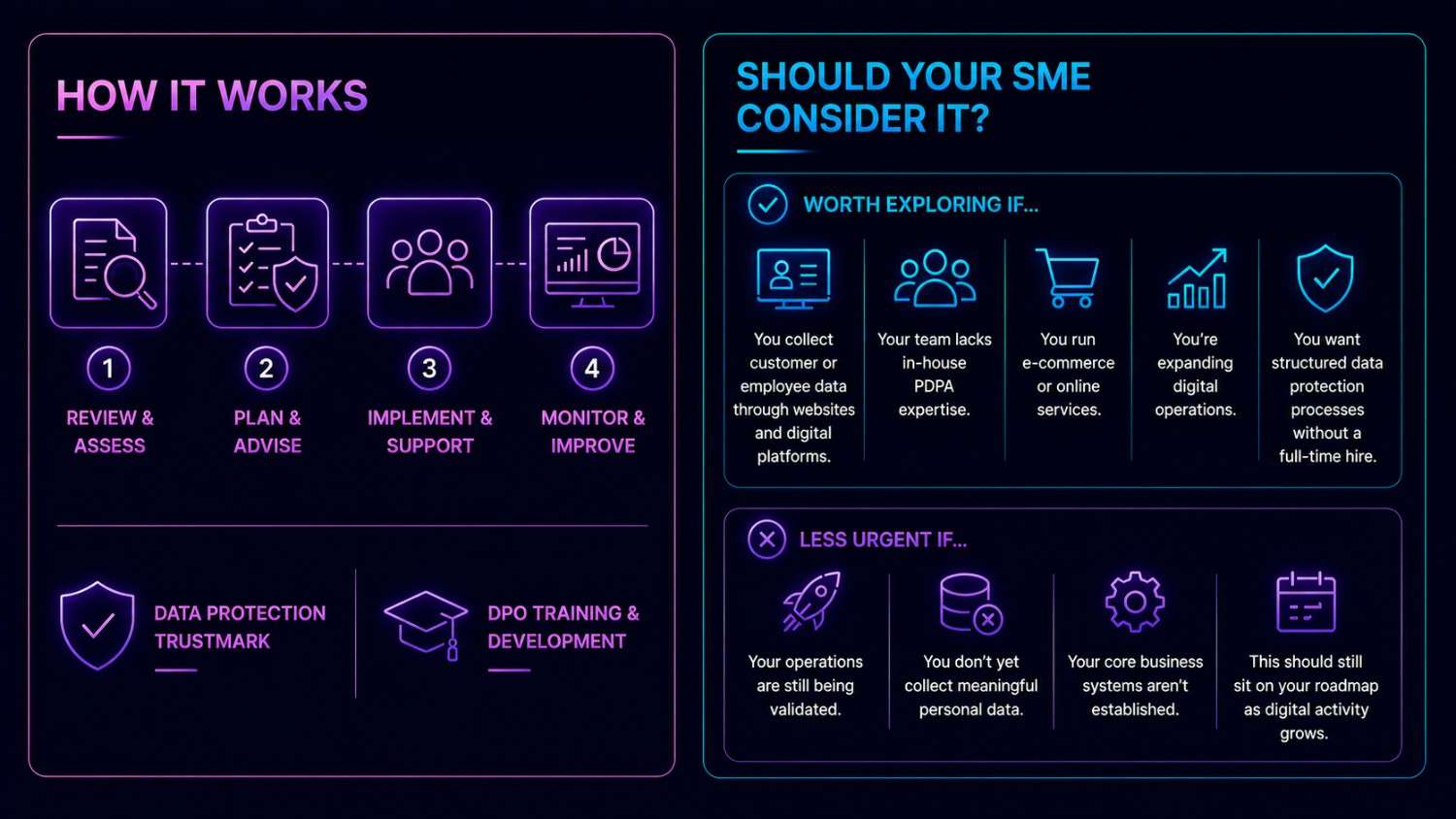
How It Works
A DPO helps a business build accountability around personal data: how it’s collected, stored, used, and protected. That typically means reviewing internal practices — gaps like unclear privacy notices, inconsistent access controls, or missing documentation — and helping teams across sales, marketing, HR, and operations apply the rules consistently.
Should Your SME Consider It?
DPO-as-a-Service is worth exploring if your business collects customer or employee data through websites and digital platforms, your team lacks in-house PDPA expertise, you run e-commerce or online services, you’re expanding digital operations, or you want structured data protection processes without a full-time hire.
It’s less urgent if your operations are still being validated, you don’t yet collect meaningful personal data, or your core business systems aren’t established — though this should still sit on your roadmap as digital activity grows.
Common SME Mistakes
Frequent gaps include assigning DPO duties without clear ownership, treating the privacy policy as a one-time document, collecting data without reviewing why it’s needed, overlooking what website forms and marketing tools capture, and only reviewing processes after a complaint or incident.
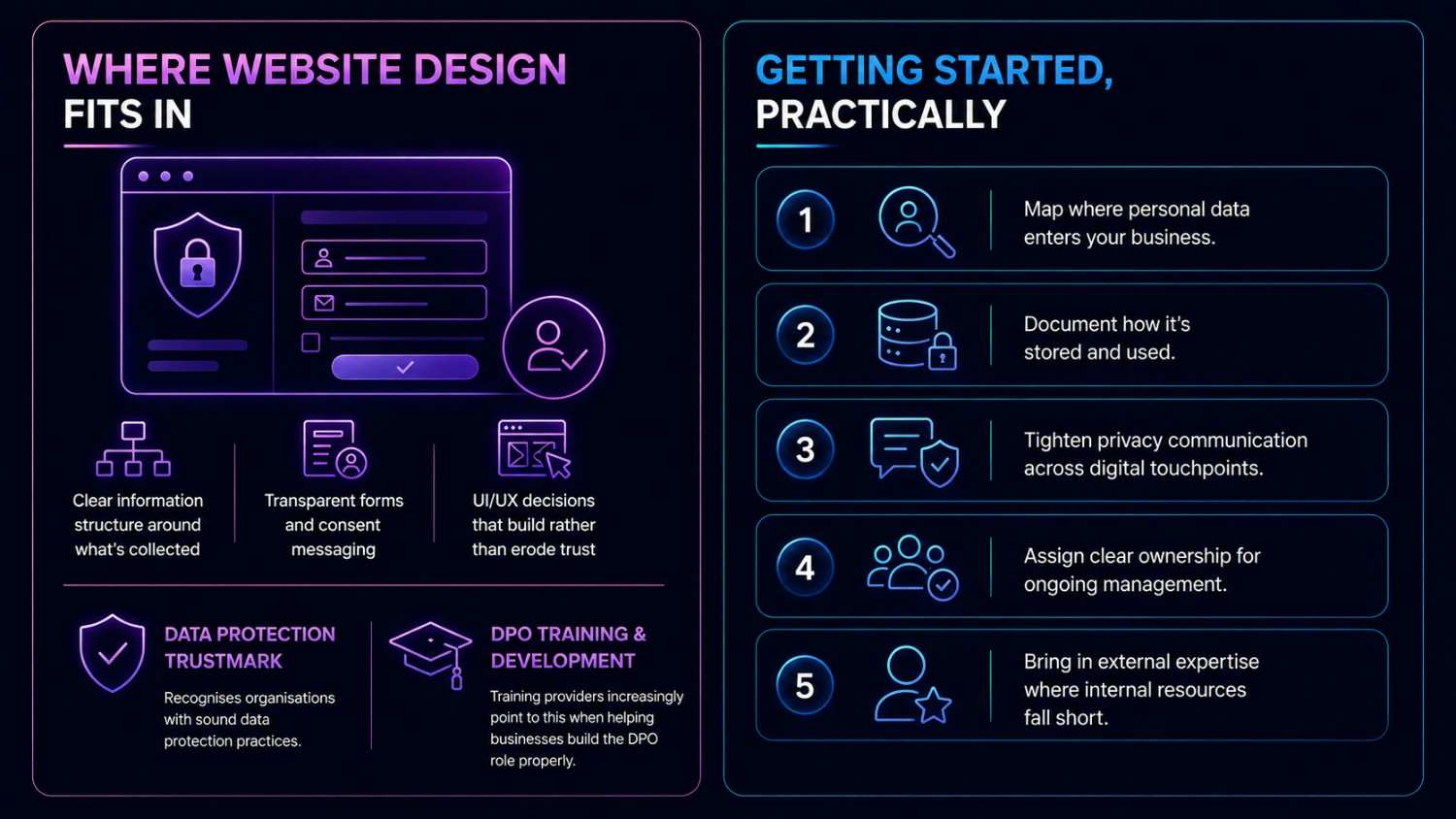
Where Website Design Fits In
A website is often the first place a business collects personal data, which is why compliance and digital experience are connected: clear information structure around what’s collected, transparent forms and consent messaging, and UI/UX decisions that build rather than erode trust. That thinking sits behind frameworks like the Data Protection Trustmark, which recognises organisations with sound data protection practices — a credential more SMEs now treat as a growth signal, not just a compliance badge, and one training providers increasingly point to when helping businesses build the DPO role properly.
Getting Started, Practically
- Map where personal data enters your business.
- Document how it’s stored and used.
- Tighten privacy communication across digital touchpoints.
- Assign clear ownership for ongoing management.
- Bring in external expertise where internal resources fall short.
How eFusion Technology Can Help
eFusion Technology has spent over 20 years helping Singapore businesses build digital platforms where customer trust and compliance work together, not against each other.
Our services include:
- Web design and development, built with clear information structure, transparent forms, and consent flows that support PDPA compliance from the first click
- E-commerce platform management (Shopify, SHOPLINE, Shopee, Lazada, TikTok Shop), so checkout data runs through consistent, well-documented processes
- AIGC content production, for privacy notices and consent copy that stay clear as regulations evolve
- AI workflow automation, to route DPO enquiries and data reviews without adding overhead for lean teams
We help businesses build digital platforms that are ready for both customers and compliance.
Conclusion
DPO-as-a-Service gives Singapore SMEs a practical path to PDPA readiness without unnecessary internal complexity. It’s not only about meeting compliance requirements — it’s about building customer confidence through responsible data practices. If you’re reviewing your digital strategy, consider how data protection fits into your website, marketing, and operations.
FAQ
Is a DPO mandatory for Singapore SMEs?
Yes. Organisations must designate at least one DPO under the PDPA.
Can an SME outsource its DPO function?
Yes. Businesses with limited manpower can outsource the operational aspects of the DPO role to a service provider.
Does having a DPO remove PDPA responsibilities from the business?
No. The organisation remains accountable for PDPA compliance regardless of who holds the DPO role.
Is DPO-as-a-Service suitable for e-commerce businesses?
Yes. Any business collecting customer data through online transactions, enquiries, or marketing can benefit from structured support.
How does data protection affect website performance?
Clear privacy communication and trustworthy UX improve customer confidence, which typically supports stronger conversion performance too.