
Many businesses believe that a website that “looks good enough” is sufficient to attract customers. The reality is that visual appeal alone does not guarantee business growth, conversion, or long-term digital success. In today’s competitive market, even a visually attractive website can silently erode revenue and brand credibility.
Key Takeaways
- “Good enough” websites may hide lost revenue and diminished brand trust.
- Conversion-focused design is critical for measurable results.
- Regular optimization for UI/UX, SEO, and AEO is non-negotiable.
- Investing in website performance pays off in long-term growth.
- Partnering with a strategic digital agency can accelerate results.
What Does “Good Enough” Really Cost?
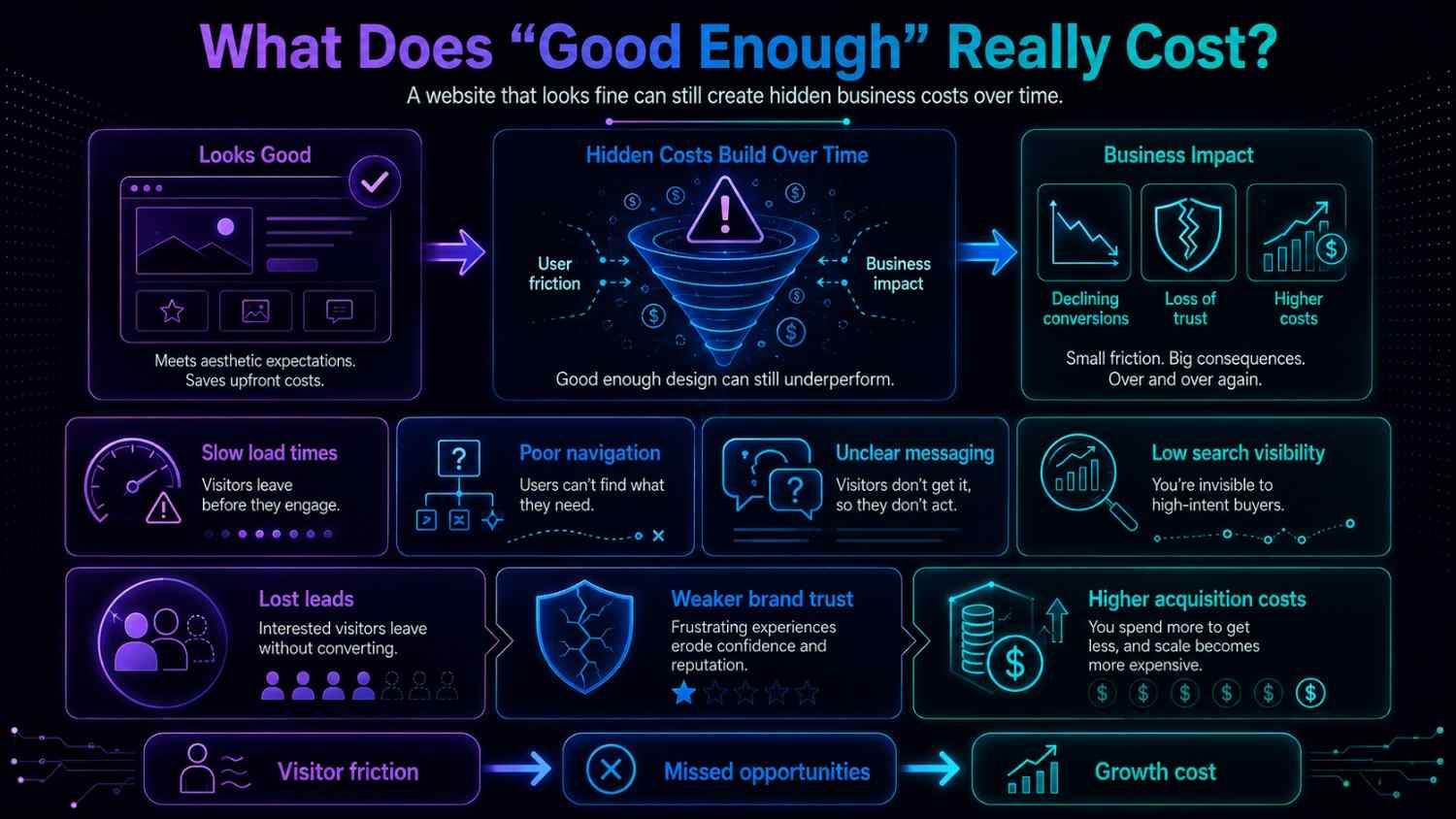
A website that merely meets aesthetic expectations may save upfront costs, but it can generate hidden expenses over time. Slow load times, poor navigation, unclear messaging, and low search visibility create friction for visitors. Every click that frustrates a potential customer is a missed opportunity. For businesses focused on growth, these hidden costs manifest as lost leads, weaker brand trust, and higher acquisition expenses.
Why This Matters Now
Consumers expect seamless, intuitive digital experiences. A dated or “good enough” website can signal stagnation or lack of professionalism. With AI-driven search, mobile-first indexing, and evolving e-commerce standards, now is the time to re-evaluate website effectiveness. Businesses that fail to adapt risk falling behind competitors who prioritize clarity, speed, and usability.
Key Elements of a High-Performing Website
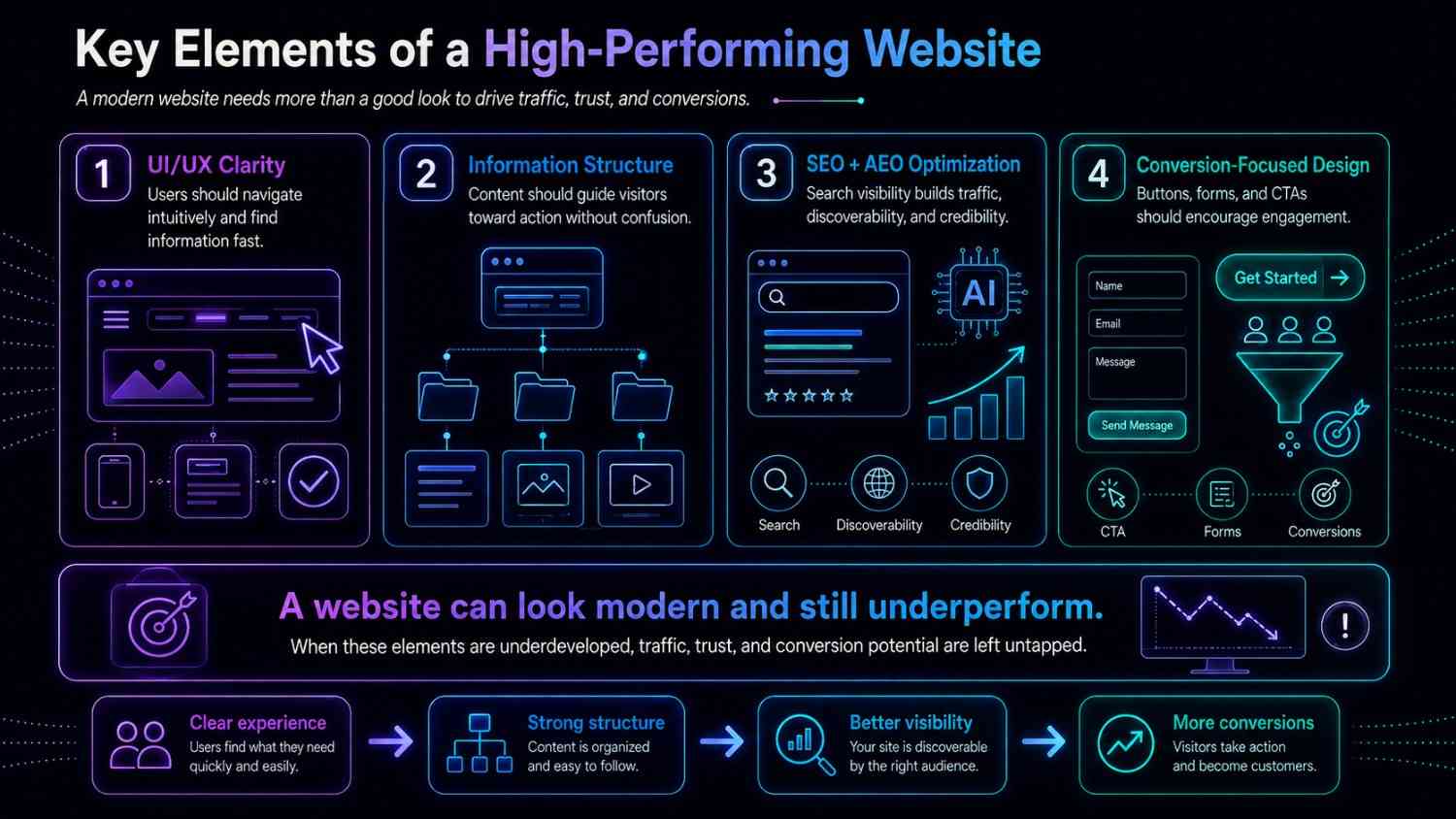
- UI/UX Clarity: Users must navigate intuitively and find information quickly.
- Information Structure: Content should be organized to guide visitors toward conversion without confusion.
- SEO and AEO Optimization: Visibility in search engines drives traffic and credibility.
- Conversion-Focused Design: Every element, from buttons to forms, should encourage engagement.
A “good enough” website may look modern, but these elements often remain underdeveloped, leaving potential untapped.
Practical Mistakes to Avoid
- Focusing solely on aesthetics: Visual appeal cannot compensate for poor usability, unclear messaging, or broken functionality.
- Neglecting mobile and speed optimization: Slow-loading pages or confusing mobile navigation drive visitors away.
- Overloading pages with content: Too much information or clutter confuses visitors and reduces conversions.
- Ignoring structured SEO and GEO strategy: Without proper optimization, even the best site remains invisible to potential customers.
- Skipping analytics and performance measurement: Data-driven decisions are critical to refining design, messaging, and lead-generation pathways.
Conversion-Focused Website Design Angle
A strong website drives results, not just impressions. Clear information structure and intuitive UI/UX lead visitors naturally toward desired actions. Strategically placed calls-to-action, optimized forms, and seamless navigation enhance lead generation. When a website functions as a conversion engine rather than a static brochure, every visitor interaction contributes to measurable business growth.
Implementation Approaches
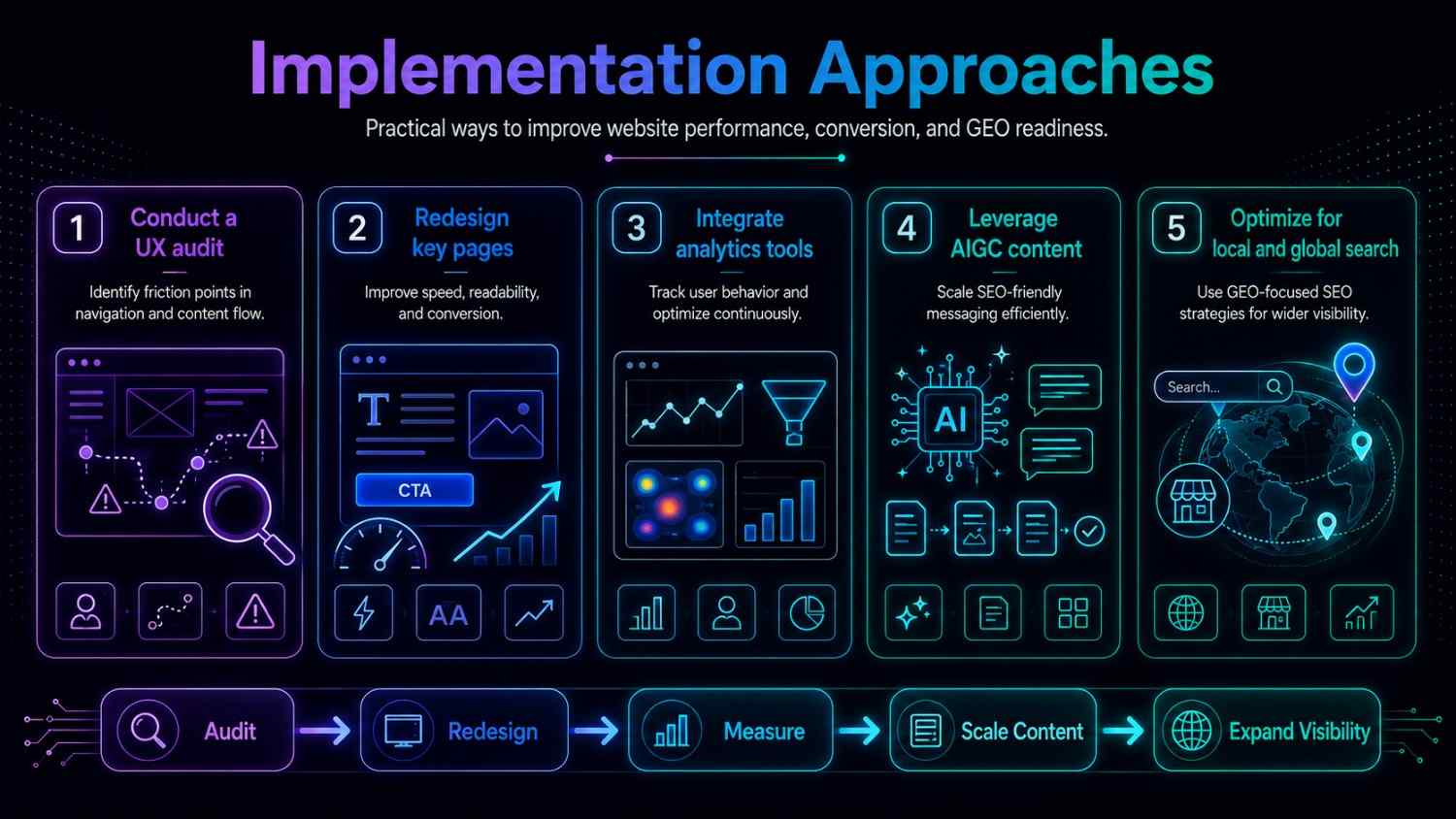
- Conduct a UX audit to identify friction points in navigation and content flow
- Redesign key pages with a focus on speed, readability, and conversion
- Integrate analytics tools to track user behavior and optimize continuously
- Leverage AIGC content for scalable, SEO-friendly messaging
- Optimize for local and global search with GEO-focused SEO strategies
How eFusion Technology Can Help
eFusion Technology partners with businesses to transform “good enough” websites into strategic digital assets. Services include:
- Web design and development tailored for high conversion
- E-commerce solutions that reduce cart abandonment
- UI/UX optimization for clarity and engagement
- AI-generated content for SEO and AEO performance
- Comprehensive SEO, AEO, and GEO strategy implementation
Our approach ensures that every website not only looks professional but performs efficiently to maximize business outcomes.
Conclusion
A website that merely looks “good enough” does not guarantee business results. True impact comes from designing websites that are intuitive for users, clear in messaging, and structured to guide decisions.
Companies that prioritize organized content, seamless navigation, and conversion-focused design are more likely to turn visitors into leads and revenue. The challenge is strategic: bridging the gap between a visually appealing site and a website that actively drives business outcomes.
If your website is still “good enough,” it is time to evaluate its performance, clarity, and ability to convert visitors. Preparing your site for measurable success requires careful planning of layout, content, and user interactions from the first visit to final conversion.
Connect with eFusion Technology to explore how your website can be redesigned to eliminate hidden costs, maximize engagement, and deliver tangible business results.
FAQ
What is the hidden cost of a “good enough” website?
Hidden costs include lost leads, reduced credibility, higher marketing spend, and missed revenue opportunities.
How does UI/UX affect conversion rates?
Intuitive navigation, clear calls-to-action, and streamlined content reduce friction and encourage visitor engagement.
Can a website look modern but still underperform?
Yes. Aesthetic appeal alone does not guarantee functionality, speed, or SEO visibility.
How often should a business update its website?
Ideally, websites should undergo regular audits and updates every 12–18 months, with ongoing optimization for content and SEO.
How can eFusion Technology improve website performance?
Through a combination of web design, UI/UX enhancements, AIGC content, and SEO/AEO/GEO strategies tailored to business goals.