

Artificial intelligence is rapidly reshaping how websites interact with visitors. In 2026, AI is no longer limited to chatbots or automation tools. It has become a core component of modern website experience design.
Organizations are using AI to personalize content, understand visitor intent, and guide users toward meaningful actions. The result is stronger engagement, improved user experience, and higher conversion rates. For marketing teams and digital leaders, AI-powered UX is not just a technology upgrade. It is a strategic tool for improving lead generation, customer engagement, and overall website performance.
Key Takeaways:
- AI turns websites into adaptive experiences, not static pages
- Personalization drives engagement and conversions
- AI guides users, reducing friction in the journey
- Strategy matters more than the AI tools themselves
What Does AI-Powered Website UX Mean in 2026?
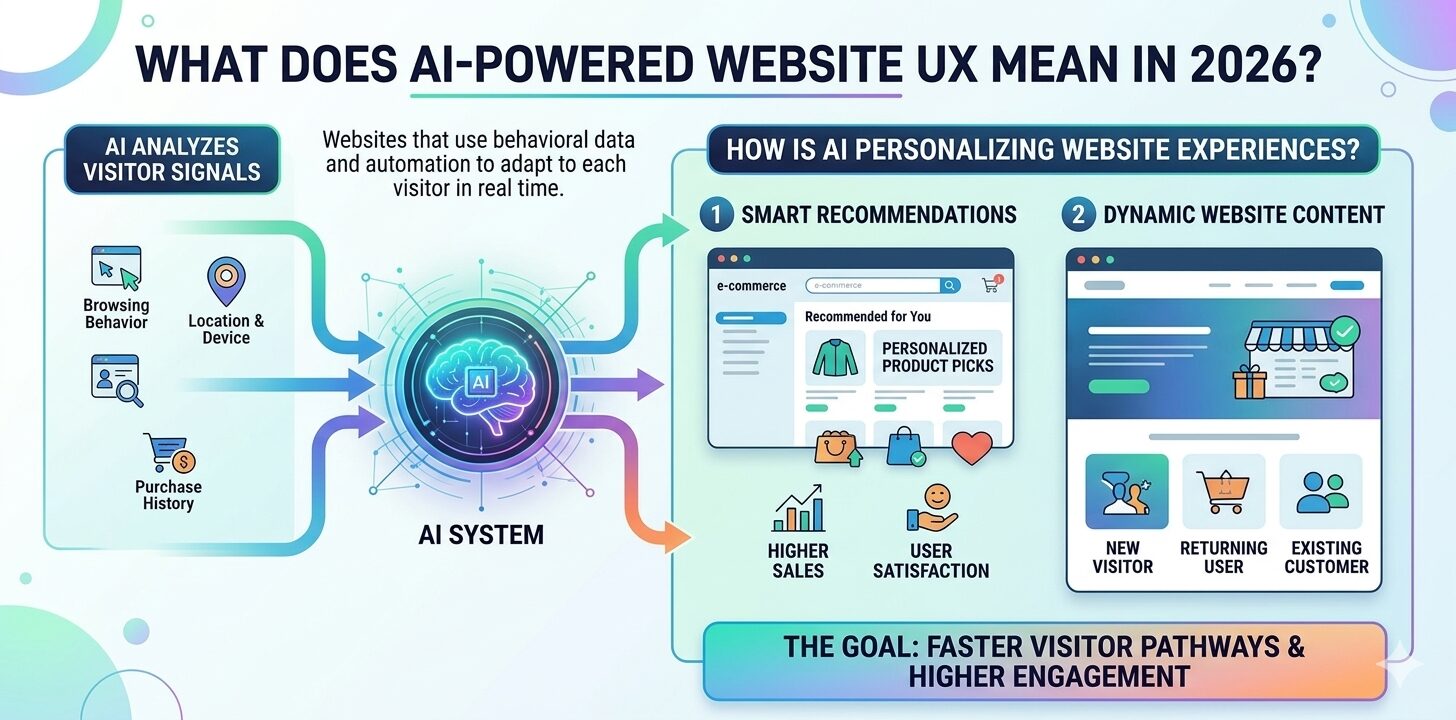
AI-powered UX refers to websites that use machine learning, behavioral data, and automation to adapt to each visitor in real time.
Instead of showing the same content to every user, AI-driven websites analyze signals such as:
- Browsing behavior
- Device and location data
- Past interactions
- Purchase history
- Search intent
Based on these insights, the website dynamically adjusts what the visitor sees.
Examples of AI-powered UX include:
- Personalized product or content recommendations
- Adaptive navigation menus
- Dynamic landing pages
- Intelligent chat assistants
The primary goal is to reduce friction and help visitors find the information they need more quickly.
How Is AI Personalizing Website Experiences?
Personalization is one of the most significant ways AI improves website UX.
Traditional websites deliver static experiences. AI-driven websites can tailor content to individual users, making interactions more relevant.
Smart Content Recommendations
AI analyzes browsing behavior and engagement signals to recommend relevant products, services, or resources.
This helps organizations:
- Increase engagement
- Improve content discovery
- Deliver more relevant user experiences
Dynamic Homepage Content
AI allows websites to adjust homepage content based on visitor behavior.
For example:
- New visitors may see educational resources
- Returning visitors may see product highlights
- Existing customers may see account features or support tools
This ensures visitors quickly find information that matches their interests.
Personalized Search Results
AI-powered search tools can better understand user intent and prioritize the most relevant results. This reduces frustration and helps visitors locate information faster.
Can AI Improve Website Navigation?
Yes. Navigation is one of the most overlooked elements of website UX, and AI is helping improve how users move through websites.
AI systems analyze how visitors interact with pages and identify friction points within the user journey.
- Predictive search suggestions
- Smart navigation restructuring
- Content recommendations
- Personalized navigation paths
For example, a visitor researching services may be guided toward:
- Educational content
- Case studies
- Pricing information
- Contact forms
This approach helps visitors progress naturally through the website and reduces cognitive effort.
How Does AI Help Increase Website Conversion Rates?
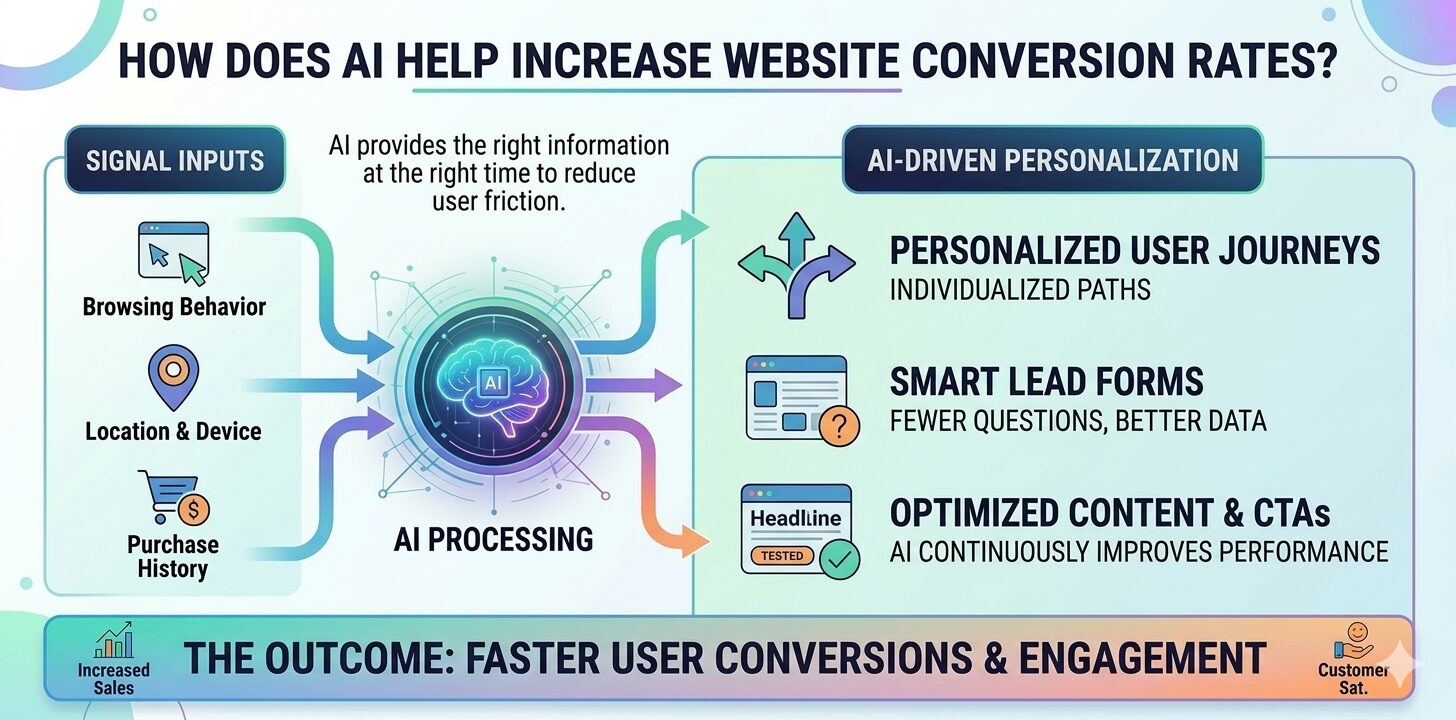
AI improves conversions by delivering the right information at the right time and reducing decision friction.
Behavior-Triggered Prompts
AI tools can display helpful prompts when users show hesitation.
Examples include:
- Exit-intent messages
- Assistance prompts on complex pages
- Personalized offers or content suggestions
These prompts encourage visitors to continue their journey.
Smart Lead Qualification
AI-powered forms can dynamically adjust questions based on visitor responses. This makes forms easier to complete while collecting more relevant information.
Content and UX Optimization
AI tools analyze engagement data to identify which headlines, layouts, and calls-to-action perform best. Over time, the website continuously improves its ability to guide visitors toward conversions.
When implemented effectively, AI-driven UX can improve key metrics such as conversion rates, session duration, and customer engagement.
Why AI-Powered UX Requires Strategic Website Design
While many AI tools promise quick improvements, effective implementation requires a clear digital strategy.
Organizations must consider how AI integrates with their website architecture, how personalization supports the customer journey, and how user data is managed responsibly.
Without strategic planning, AI features can create fragmented experiences rather than improving usability.
Combining AI capabilities with conversion-focused website design and a structured digital strategy helps ensure meaningful results.
Conclusion
Artificial intelligence is redefining website user experience in 2026 by making digital interactions smarter, faster, and more personalized. From intelligent chatbots to adaptive content and predictive navigation, AI helps businesses remove friction and engage visitors more effectively.
Organizations that integrate AI into their websites are creating digital experiences that better understand customer intent and support stronger engagement throughout the buyer journey.
A strong AI-powered website UX strategy helps organizations improve search visibility, build trust with decision-makers, and convert website visitors into qualified opportunities.
If your organization is exploring AI-powered website UX, get in touch with us to discuss how a structured digital strategy and conversion-focused website can support your growth goals.
FAQs
Is AI-powered website personalization expensive to implement?
Not necessarily. Many modern platforms offer built-in AI tools that allow businesses to introduce personalization gradually without major development costs.
Can small businesses benefit from AI-powered UX?
Yes. Even smaller organizations can implement AI tools such as chatbots, personalized recommendations, and smart search to improve website engagement.
How can AI improve B2B website engagement?
AI helps B2B websites deliver more relevant content, recommend resources based on visitor behavior, and guide prospects toward the information they need to make informed decisions. This improves engagement and supports a smoother buyer journey.